
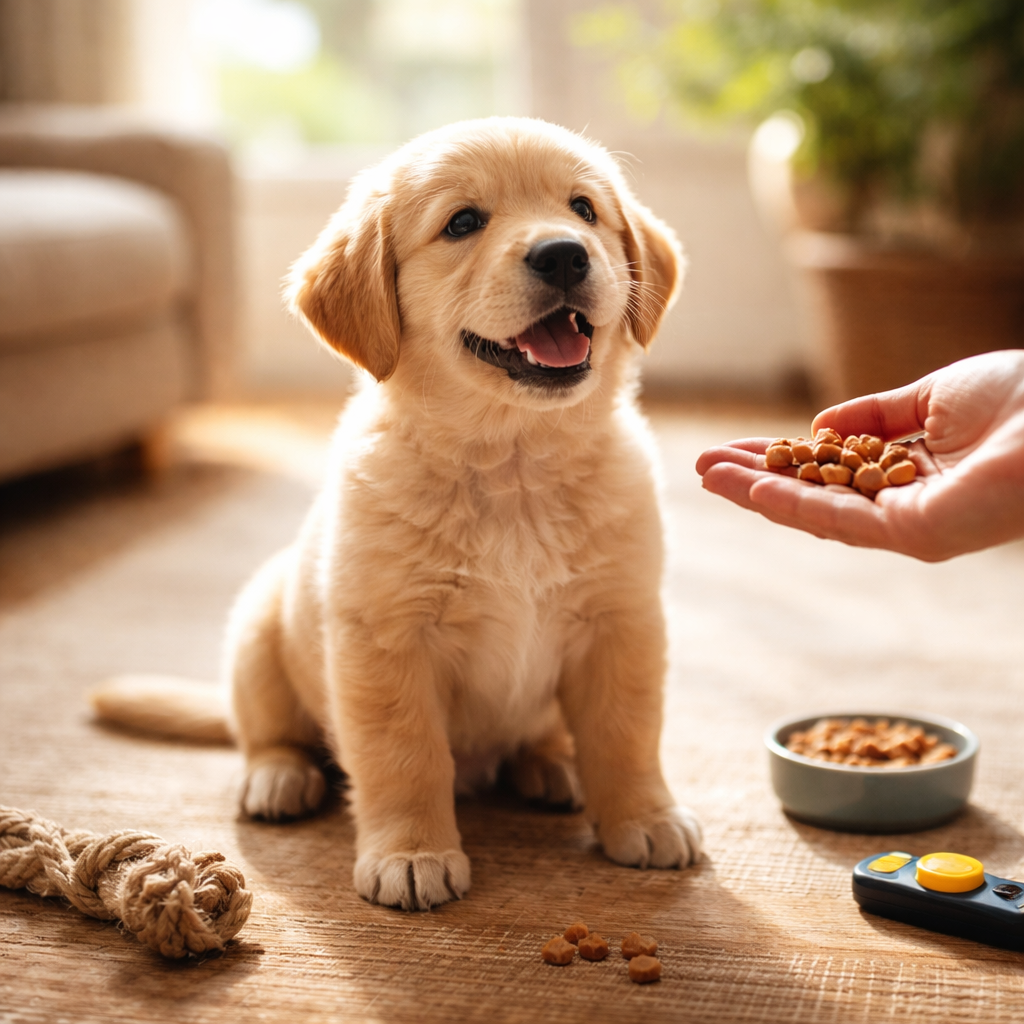
Most puppies can learn to sit within just a few short training sessions — but only if you approach it the right way. Knowing how to train a puppy to sit is one of the most foundational skills any new dog owner should pick up early, because “sit” isn’t just a party trick. It builds the communication channel between you and your dog, teaches impulse control, and makes every future command easier to introduce.
Why “sit” is the right place to start
Before diving into the steps, it helps to understand why this particular command matters so much. “Sit” is a natural position for dogs — they do it on their own all the time. That means you’re not asking your puppy to do something physically difficult or unnatural. You’re simply attaching a word and a cue to a behavior the dog already offers spontaneously.
This makes it an ideal starting point for positive reinforcement training. Your puppy gets quick wins, builds confidence, and learns that responding to you leads to good things. From there, commands like “stay,” “down,” and “come” become much easier to layer on top.
What you’ll need before your first session
Keep things simple. You don’t need fancy equipment or a professional training space. Here’s what actually makes a difference:
- Small, soft treats your puppy genuinely gets excited about (tiny pieces of chicken, cheese, or commercial training treats work well)
- A quiet space with minimal distractions, especially in the beginning
- A calm, upbeat mood — dogs are highly sensitive to your energy
- Sessions no longer than 3–5 minutes at a time for young puppies
One thing many new owners underestimate is treat size. Each reward should be about the size of a pea. You’ll be repeating the exercise multiple times, and you don’t want your puppy to fill up or lose interest after five repetitions.
The lure method: step by step
The lure method is the most widely recommended approach for teaching sit to puppies because it’s fast, clear, and doesn’t involve any physical pressure or pushing the dog into position.
- Hold a treat close to your puppy’s nose so they can smell it clearly.
- Slowly move your hand upward and slightly back over the puppy’s head. As their nose follows the treat, their bottom will naturally lower toward the floor.
- The moment their bottom touches the ground, say “sit” in a clear, calm voice and immediately give the treat along with verbal praise.
- Release the puppy with a cue like “okay” or “free” so they learn that sitting has a clear beginning and end.
- Repeat 4–6 times per session, then take a break.
Timing is everything in puppy training. The reward must come within one to two seconds of the desired behavior — otherwise your puppy can’t connect the action to the consequence.
After a few successful sessions, start introducing the verbal cue before the lure, not after. Say “sit,” pause one second, then use the hand motion. Over time, your puppy will begin responding to the word alone.
Common mistakes that slow down progress
Even with the right method, certain habits can quietly undermine your training without you realizing it. Here are the ones that come up most often:
| Mistake | Why it’s a problem | What to do instead |
|---|---|---|
| Repeating the command multiple times | Teaches the puppy they don’t need to respond the first time | Say “sit” once, wait, then reset if needed |
| Pushing the puppy’s rear down | Can cause discomfort and creates confusion about what you want | Use luring only — let the behavior happen naturally |
| Training when the puppy is overexcited or tired | Reduces learning capacity significantly | Train when the puppy is calm and alert, usually after some light activity |
| Skipping the release cue | The puppy never learns when “sitting” is actually over | Always end the behavior with a consistent release word |
Moving from treats to real-life rewards
A concern many owners raise is dependency on treats — “will my dog only sit if I have food?” The answer is no, provided you gradually shift your reward system over time.
Once your puppy is reliably sitting on cue in low-distraction environments, begin varying your rewards. Sometimes use a treat, sometimes praise and petting, sometimes a short game with a toy. This variable reward schedule actually strengthens the behavior, because the dog never knows exactly what’s coming and stays engaged.
You can also begin asking for a “sit” before things the puppy already wants — before meals, before going outside, before a greeting. These natural life rewards are incredibly powerful and help the command become a genuine part of daily routine rather than something reserved only for training sessions.
Adding distractions: the part most people skip too soon
A puppy that sits perfectly in your living room but ignores you at the park hasn’t fully learned the command — it’s learned to sit in one specific context. Generalization is a separate step that requires deliberate practice.
The process is simple but requires patience. Once your puppy sits reliably at home, move to a slightly busier environment — your backyard, a quiet hallway, a friend’s house. Practice there until the response is solid, then increase the level of distraction again. Each new environment essentially resets your puppy’s learning slightly, so expect a short adjustment period each time.
Think of it this way: a puppy learning to sit in ten different environments is far more reliable than a puppy who has practiced sit a hundred times in one room.
Building on this one skill
Once “sit” is solid, you have a real building block to work with. “Sit-stay” extends duration. “Sit” before greetings reduces jumping. “Sit” at curbs becomes a safety habit on walks. Pairing sit with eye contact — where the puppy looks at you before getting the reward — lays the groundwork for focused heel work and recall training.
The progress you make now with this one simple behavior will ripple through every other aspect of your puppy’s training. Keep sessions short, keep your attitude positive, and let your puppy’s enthusiasm guide the pace. Dogs learn fastest when training feels more like play than work — and with a little consistency, sit becomes second nature faster than most new owners expect.