
Most people who want to start a YouTube channel get stuck before they even hit record — not because they lack ideas, but because they overthink every step. The truth is, the technical side is far simpler than it looks, and the creative side is something you figure out by doing, not by planning indefinitely.
What you actually need before creating your first video
Before diving into equipment lists and editing software, it helps to get clear on two things: who you’re talking to and what kind of content you want to make consistently. Not just once or twice — but week after week. Channel growth is almost always tied to consistency, and consistency is only possible when you genuinely care about the subject.
Your niche doesn’t need to be ultra-specific from day one, but it should give viewers a reason to subscribe. Ask yourself: if someone watches one of my videos, what would make them want to come back? That answer is your starting point.
Setting up your channel the right way
Creating a Google account and opening YouTube Studio takes about ten minutes. But the decisions you make during setup shape how your channel is perceived from the very first visit.
- Choose a channel name that’s easy to remember, spell, and search for.
- Write a channel description that clearly explains what your content covers — include natural language your target audience would use when searching.
- Upload a profile picture and channel banner that look consistent and professional, even if they’re simple.
- Set up your channel trailer — a short video (60–90 seconds) that tells new visitors exactly what to expect.
- Organize your About section with relevant links and contact information.
These elements form the first impression for both viewers and search algorithms. YouTube’s recommendation system pays attention to how well your channel metadata aligns with your actual content — so clarity here pays off over time.
Gear that’s good enough vs. gear that holds you back
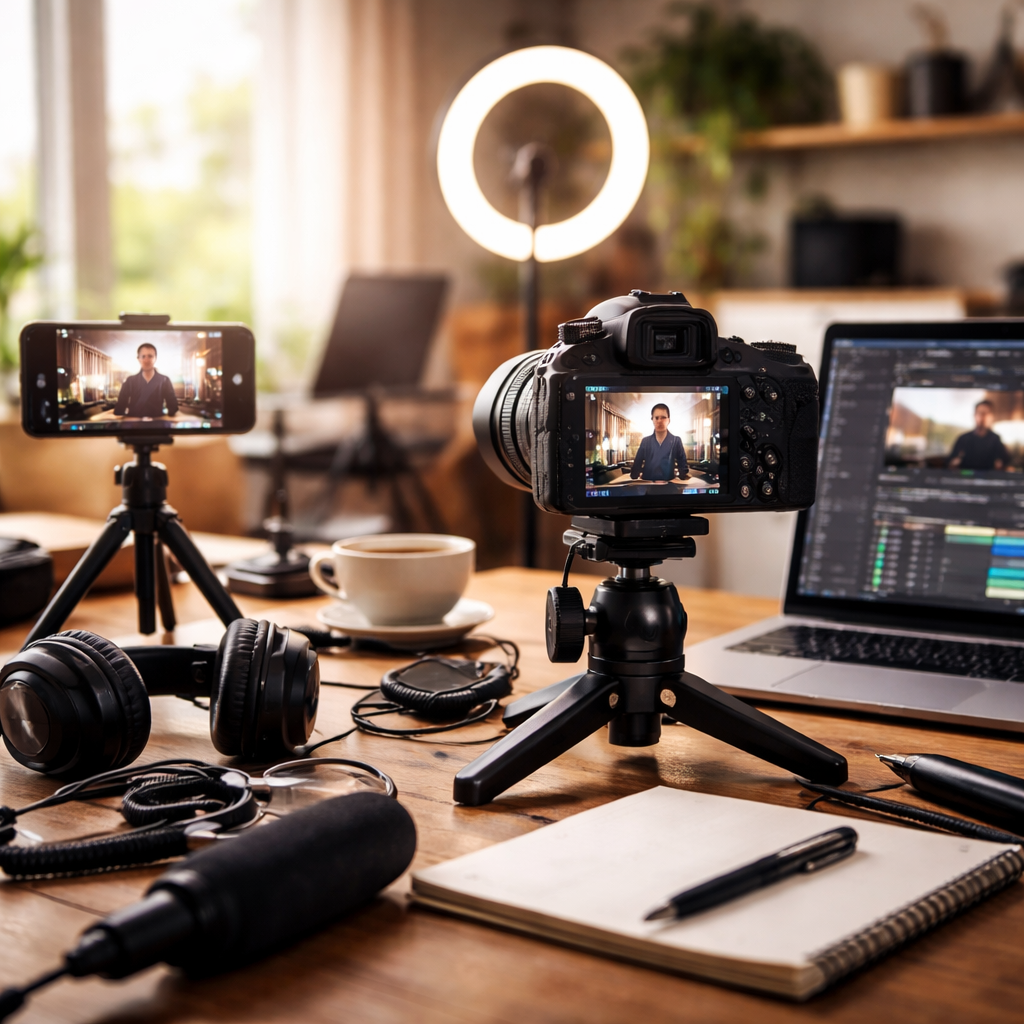
One of the most common myths is that you need expensive equipment to grow. In practice, poor audio quality drives viewers away far faster than imperfect video. A smartphone with decent resolution and a budget lapel microphone will outperform a professional camera paired with built-in audio in almost every case.
| What you need | Budget option | What it improves |
|---|---|---|
| Camera | Modern smartphone | Visual quality |
| Microphone | Lapel or USB mic ($20–50) | Audio clarity |
| Lighting | Natural window light or a ring light | On-screen presence |
| Editing software | DaVinci Resolve (free) or CapCut | Pacing and polish |
Start with what you have, publish your first few videos, and upgrade equipment only when a specific limitation starts affecting your content quality. Waiting for the “perfect” setup is one of the main reasons channels never launch at all.
Video optimization that actually reaches people
Creating great content is only half the work. If your videos aren’t discoverable, even the best material gets lost. YouTube SEO — the practice of optimizing titles, descriptions, and tags so the platform understands and surfaces your content — is a skill worth developing early.
Your video title should reflect what people are already searching for, not just what sounds clever to you. Think like your viewer, not like a marketer.
A few principles that consistently make a difference:
- Write titles that match real search intent — use YouTube’s autocomplete to find natural phrasing.
- Put the most important information in the first two lines of your description, since that’s what appears before “show more.”
- Design thumbnails with contrast and a clear focal point — your thumbnail competes with dozens of others in every search result.
- Use chapters (timestamps) in your description to improve watch time and help viewers navigate longer videos.
- Encourage genuine engagement — comments and watch time signal relevance to the algorithm more than likes alone.
Building a posting rhythm without burning out
The most sustainable upload schedule isn’t the most frequent one — it’s the one you can actually maintain. Many creators start strong with daily uploads and disappear after six weeks. Others post once every two weeks and build loyal audiences over time simply by showing up reliably.
Batch recording — filming multiple videos in a single session — is one of the most practical tools for maintaining consistency. It separates the creative energy of filming from the slower, more focused work of editing, and gives you a buffer when life gets busy.
When results feel slow — what the data actually shows
Most channels don’t gain meaningful traction in the first three months. This isn’t a sign that something is wrong — it’s simply how the platform works. YouTube’s algorithm needs time and data to understand your content and identify the right audience for it. Early videos are essentially training data for the recommendation system.
Instead of tracking subscriber counts obsessively, focus on metrics that indicate genuine viewer interest: average view duration, click-through rate on thumbnails, and whether people are watching multiple videos in a session. These tell you far more about content quality than raw numbers.
Growth on YouTube is rarely linear. Channels frequently plateau for months and then see rapid increases after one video connects with a wider audience. The creators who reach that inflection point are almost always the ones who kept publishing and kept improving — not the ones who paused to wait for a perfect strategy.