
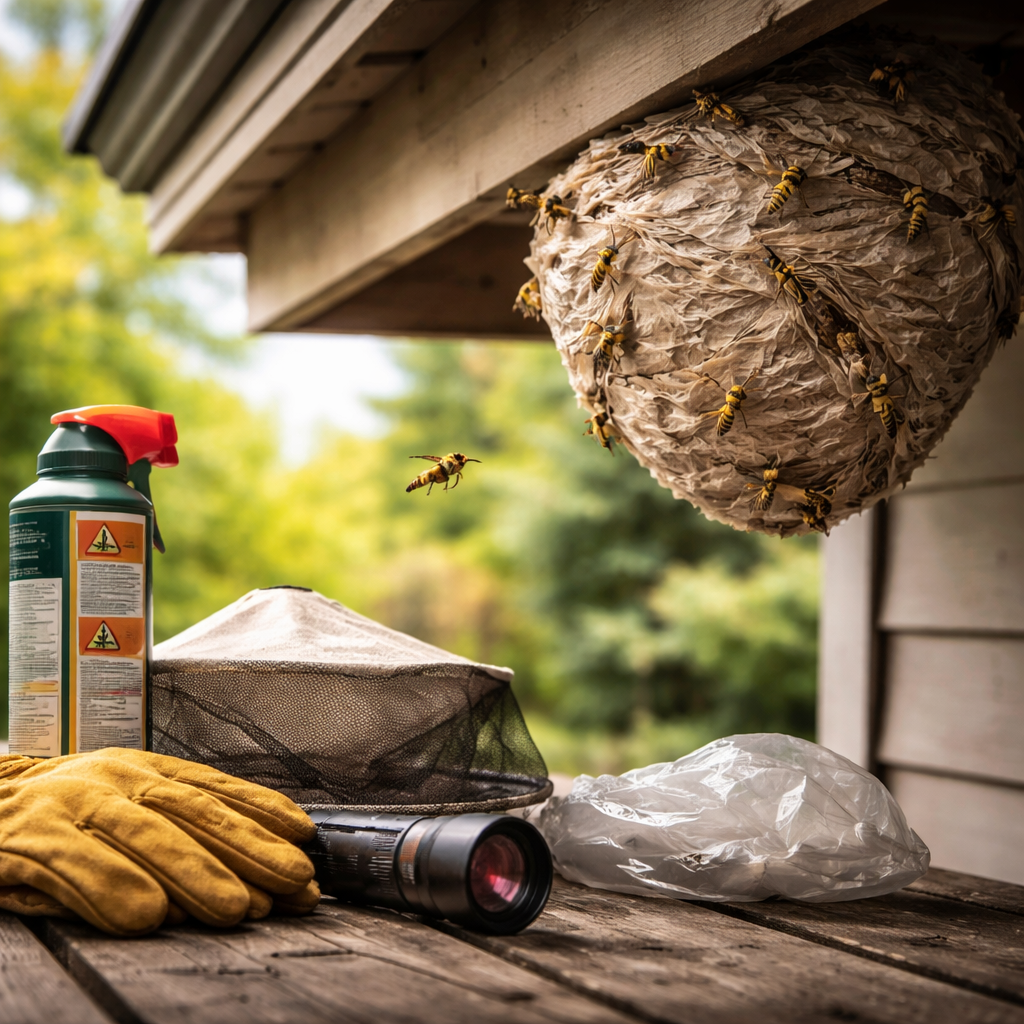
Most wasp stings happen not in open fields, but right at home — near a nest that went unnoticed for weeks. Knowing how to get rid of wasp nests safely can make the difference between a quick fix and a painful trip to urgent care. Whether the nest is tucked under your roof overhang, buried in the ground, or hidden inside a wall cavity, the approach matters as much as the timing.
Why wasps build nests where they do
Wasps are opportunistic architects. They look for sheltered, dry spots with easy access to the outside — and unfortunately, the average home offers plenty of those. Common nesting locations include attic spaces, garden sheds, hollow tree trunks, wall voids, and even underground burrows made by rodents. The queen starts construction in spring by chewing wood fibers mixed with saliva, creating that distinctive papery material. By late summer, a single colony can house several hundred to a few thousand workers, which is when nests become genuinely dangerous to disturb.
Understanding the biology helps you act at the right moment. Early-season nests — roughly the size of a golf ball — are much easier and safer to remove than fully developed colonies. If you spot a nest forming in spring, you have a real window of opportunity.
Assessing the risk before you do anything
Not every wasp nest demands immediate removal. Before reaching for a spray can, take a moment to evaluate a few things:
- Is the nest in a high-traffic area where people or pets could accidentally disturb it?
- How large is the colony? A nest smaller than a tennis ball is far less aggressive than a mature one.
- Does anyone in your household have a known allergy to wasp venom?
- Is the nest in an enclosed space like a wall void, where DIY removal becomes especially tricky?
If the nest is in a remote corner of your garden and poses no immediate threat, some pest control experts actually recommend leaving it alone through summer — wasps are effective predators of other insects and can help with garden pest control. Once temperatures drop in autumn, the colony naturally dies off and the nest is abandoned.
Wasp colonies do not reuse old nests. An abandoned nest from last year poses no stinging risk — though it can attract new queens looking for a ready-made home if left in an enclosed space.
Timing your removal the right way
If removal is necessary, timing is everything. The safest window is either very early morning or after dusk, when wasps are sluggish and most workers have returned to the nest. Avoid removing nests on warm, sunny afternoons — that is when activity peaks and the colony is most defensive.
Cooler temperatures in late evening naturally reduce wasp aggression, giving you a much calmer working environment. This is not a task to rush.
What you actually need for safe removal
Preparation is what separates a successful removal from an emergency. Here is what pest control professionals recommend having ready before approaching any active nest:
| Item | Purpose |
|---|---|
| Protective clothing (long sleeves, gloves, closed shoes) | Minimizes exposed skin |
| Full face protection or a beekeeper veil | Protects eyes and face from stings |
| Wasp-specific insecticide spray | Fast knockdown of foraging wasps |
| Dust insecticide (for ground nests or wall voids) | Penetrates deep into nest chambers |
| Flashlight with red filter | Wasps are less reactive to red light at night |
| Plastic bag for nest disposal | Safe containment after treatment |
Never approach a nest bare-handed or in loose clothing. Even a single wasp releasing alarm pheromones can trigger a coordinated defensive response from the entire colony within seconds.
Step-by-step: removing a wasp nest yourself
For above-ground nests that are clearly visible and accessible, a controlled DIY removal is feasible for most people, provided the colony is not enormous and no one present has a venom allergy.
- Wait until nightfall and dress in full protective gear before approaching.
- Apply a jet-spray wasp insecticide directly into the nest opening from a safe distance — most products are effective from up to 5–6 meters away.
- Do not run immediately. Step back slowly and calmly to avoid provoking any wasps that exit.
- Leave the treated nest undisturbed for at least 24 hours to ensure the insecticide has worked through the colony.
- Return the following night, check for any remaining activity, and if the nest is silent, seal it in a heavy-duty plastic bag and dispose of it in an outdoor bin.
Ground nests require a different approach. Pour an insecticide dust or liquid directly into the entrance hole at night, then cover it temporarily with a stone or soil. Repeat after 48 hours if activity continues.
When DIY is not the right call
There are situations where calling a licensed pest control professional is simply the smarter and safer choice. These include:
- Nests located inside wall cavities, chimneys, or roof spaces — improper treatment can drive wasps deeper into the structure or into living areas
- Colonies that appear unusually large or aggressive
- Any household member with a known anaphylactic reaction to stings
- Nests in areas that are physically difficult to access safely
Professional pest controllers have access to stronger insecticides, full protective suits, and the experience to handle difficult scenarios without turning a manageable problem into a medical one. The cost of a single professional visit is nearly always worth it in these cases.
Keeping wasps from coming back
Removing a nest solves the immediate problem, but prevention is what keeps your home wasp-free long term. A few straightforward habits make a real difference over time.
Seal any gaps in rooflines, soffits, window frames, and exterior walls before spring arrives — this cuts off the most common entry points queen wasps scout in early season. Keep outdoor bins tightly lidded, since food waste is a major attractant. If you eat outdoors, cover sweet drinks and food promptly, as foraging wasps are drawn to sugars and proteins.
Some homeowners hang decoy wasp nests near problem areas. Wasps are territorial and typically avoid establishing a colony near an existing one. While the evidence on decoy effectiveness is anecdotal, many users report positive results when combined with other prevention measures.
Staying calm and methodical is the thread that runs through every successful wasp nest removal — whether you handle it yourself or call in a professional. The more you understand about wasp behavior, nesting cycles, and the right tools for the job, the safer and less stressful the whole process becomes.