
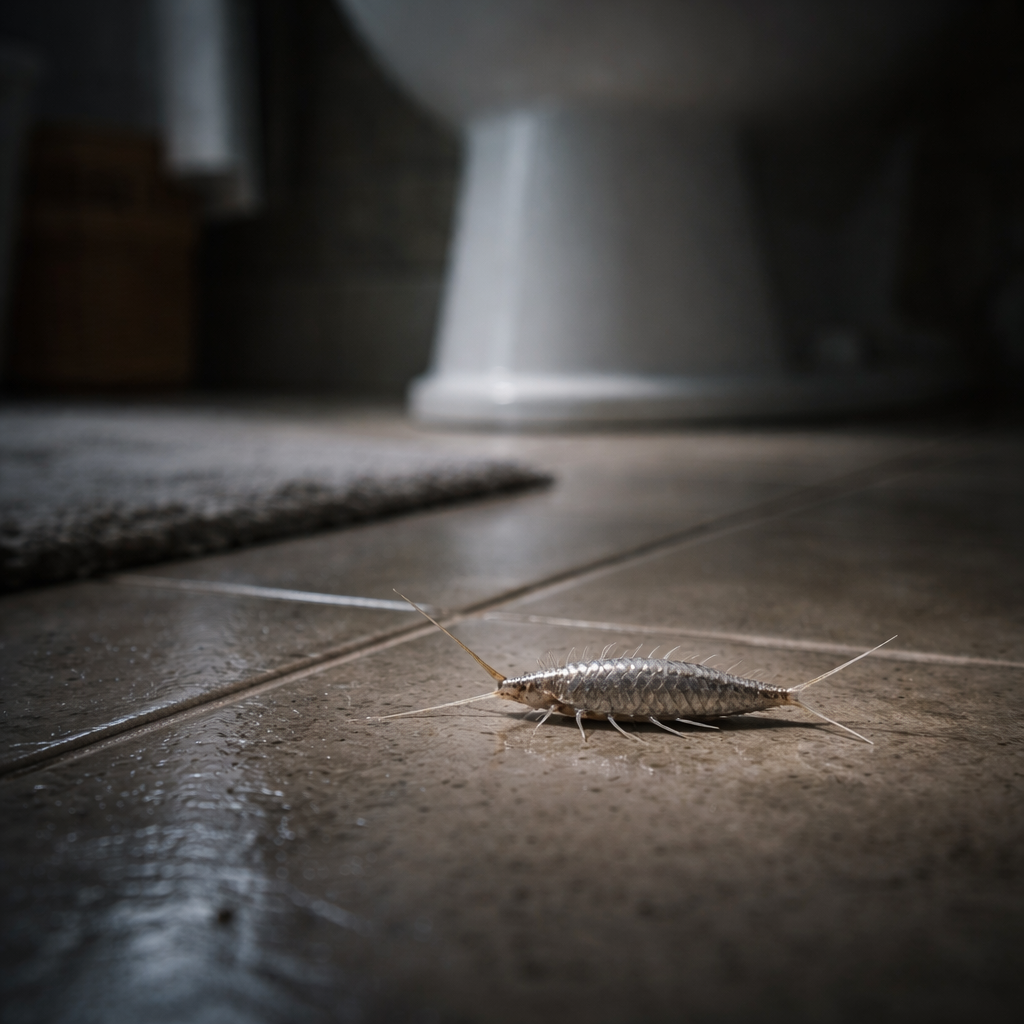
You walk into your bathroom late at night, turn on the light, and something small and silvery darts behind the toilet. If that scene sounds familiar, you already know the problem — and figuring out how to get rid of silverfish in the bathroom is more urgent than it seems, because these insects rarely show up alone.
Why the bathroom is their favorite spot
Silverfish thrive wherever moisture, warmth, and organic material come together. Your bathroom checks all three boxes effortlessly. Steam from showers raises humidity levels, grout and caulk trap moisture for hours, and cellulose-based materials — think wallpaper, cardboard storage boxes, even toilet paper rolls — give them a steady food source. Understanding this combination is the first step toward eliminating the infestation rather than just scattering individual insects.
These insects are nocturnal and fast-moving, which is why most people only spot them by accident. Their flat, teardrop-shaped bodies let them squeeze through cracks as thin as a few millimeters, and they can survive months without food. That resilience is exactly what makes casual swatting or spraying ineffective in the long run.
What actually attracts them — and what doesn’t
A common misconception is that silverfish appear only in dirty bathrooms. In reality, cleanliness has very little to do with it. The primary driver is humidity. Bathrooms without adequate ventilation can sustain relative humidity well above 75%, which is the threshold at which silverfish colonies genuinely flourish.
| Condition | Attractive to silverfish? |
|---|---|
| Humidity above 75% | Strongly yes |
| Poor ventilation | Yes |
| Cardboard boxes stored in bathroom | Yes |
| Dry, well-ventilated space | No |
| Sealed tile grout | Significantly less attractive |
Practical steps that actually work
Effective control comes from combining environmental changes with targeted treatments. Relying on just one method rarely produces lasting results.
Reduce moisture at the source
This is non-negotiable. Run your bathroom exhaust fan during and for at least 20 minutes after every shower. If your bathroom lacks a fan, a dehumidifier set to keep relative humidity below 50% will do the work instead. Fix any leaking pipes under the sink promptly — even a slow drip creates the persistently damp conditions silverfish need to reproduce.
Seal entry points and hiding places
Check the caulking around your bathtub, shower base, and sink. Cracked or missing caulk is not just a water damage risk — it is a direct highway for silverfish moving between wall cavities and your bathroom interior. Resealing these gaps with waterproof silicone caulk removes both the entry point and the microhabitat they hide in during daylight hours.
Use diatomaceous earth strategically
Food-grade diatomaceous earth is one of the most reliable non-toxic options available. When silverfish walk through it, the microscopic sharp edges damage their exoskeleton and cause dehydration. Apply a thin layer along baseboards, behind the toilet, inside cabinet bases, and around pipe entry points. It works slowly but persistently, and it does not lose effectiveness unless it gets wet.
Diatomaceous earth is only effective when dry. After cleaning or any water exposure, reapply it to maintain continuous coverage.
Cedar and essential oils as a deterrent
Silverfish strongly dislike the scent of cedar, lavender, and clove oil. Cedar blocks or sachets placed inside bathroom cabinets help repel them from storage areas. A diluted solution of clove or lavender essential oil sprayed along baseboards acts as a natural deterrent. These are not elimination tools on their own, but they meaningfully reduce the appeal of your bathroom as a habitat when used alongside moisture control.
Sticky traps for monitoring and reduction
Placing sticky insect traps in corners, under the sink, and near the toilet base serves two purposes: it catches individual insects and helps you gauge whether your other measures are working. A sharp drop in trap catches over two to three weeks is a reliable sign that the infestation is declining.
Things to remove from your bathroom entirely
Clutter is underrated as a contributing factor. Silverfish shelter in dark, undisturbed spaces, and bathrooms often accumulate exactly that kind of environment without people noticing.
- Old magazines or books stored near the toilet
- Cardboard boxes used for spare storage
- Stacks of spare towels left on open shelves for extended periods
- Unused toiletry bottles that have been sitting in corners for months
- Loose paper products not stored in sealed containers
Moving these items out of the bathroom — or at minimum storing them in sealed plastic containers — eliminates both food sources and harborage sites simultaneously.
When to call a pest control professional
DIY methods handle the majority of silverfish problems effectively when applied consistently. However, if you are still seeing active silverfish after four to six weeks of combined treatment, or if you are finding them in multiple rooms beyond the bathroom, the infestation has likely spread into wall voids or subfloor spaces. At that point, a licensed pest control technician can apply residual insecticides in areas that are inaccessible without professional equipment.
Professional treatment is also worth considering if your bathroom has structural moisture issues — such as a slow leak inside the wall — that you cannot resolve yourself. In those situations, no surface-level pest control method will deliver permanent results until the underlying moisture source is addressed.
Keeping them gone once the problem is solved
Prevention is genuinely easier than dealing with a recurring infestation. Once you have cleared your bathroom of silverfish, a few consistent habits will make it far less hospitable going forward. Run ventilation consistently, reseal caulk annually, and do a quick check of under-sink areas every few months. Silverfish populations build slowly — catching the early signs of a return is much simpler than dealing with an established colony.
The good news is that silverfish do not bite, carry disease, or cause structural damage the way termites do. The inconvenience is real, but so is the solution — and most people who address humidity and harborage sites together see clear results within a few weeks.