
Waking up with swollen, heavy-looking eyes is one of those morning frustrations that can throw off your entire start to the day — and if you’ve been searching for how to get rid of puffy eyes in the morning, you’re far from alone. The good news is that most causes of morning puffiness are completely manageable once you understand what’s actually happening under the skin.
Why your eyes swell overnight in the first place
The skin around your eyes is the thinnest on your entire face — roughly 0.5 mm thick compared to about 2 mm elsewhere. That makes it exceptionally sensitive to fluid retention, inflammation, and circulation changes. While you sleep, your body shifts into recovery mode, and lymphatic drainage slows down. Fluid accumulates in the soft tissue around the orbital area, and by the time your alarm goes off, the result is visible swelling.
Several factors can make this worse. Sleeping on your stomach or side causes gravity to work against you, letting fluid pool around the eyes rather than drain away. A high-sodium dinner, one too many glasses of wine, seasonal allergies, or even crying before bed all contribute to more pronounced puffiness. Understanding your personal triggers is the first practical step toward waking up looking refreshed.
Immediate fixes that actually work
When you need results fast — before work, a meeting, or simply because you want to feel human again — these techniques can reduce visible swelling within 10 to 20 minutes.
- Cold water splash: Rinse your face with cold water for 30–60 seconds immediately after waking. The cold temperature causes blood vessels to constrict, which visibly reduces puffiness.
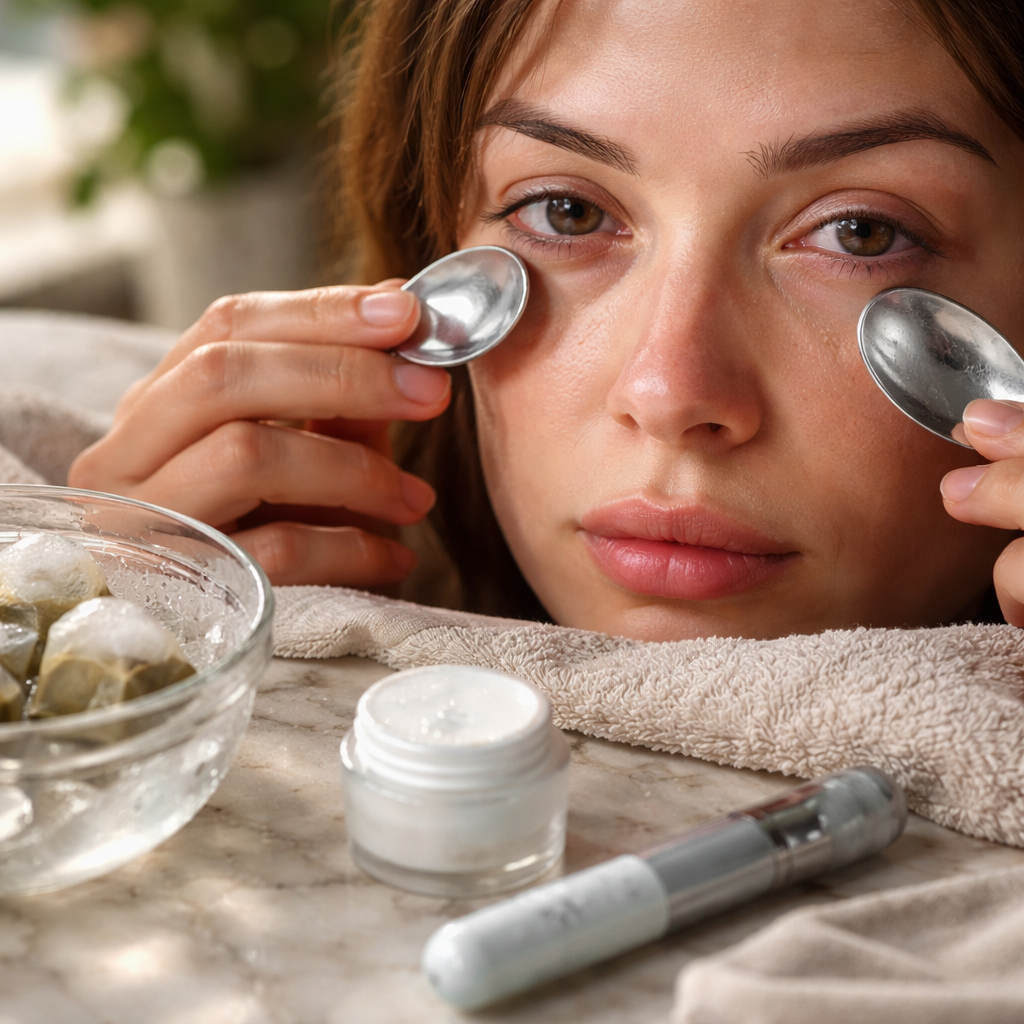
- Chilled spoons: Place two metal spoons in the freezer or a glass of ice water for a few minutes, then hold them gently over your closed eyelids. The sustained cool contact helps drain excess fluid.
- Cold green or black tea bags: Brew two bags, let them cool completely in the refrigerator, then place them on your eyes for 10 minutes. Both green and black tea contain tannins and caffeine, which have a mild vasoconstrictive effect on the skin.
- Gentle lymphatic massage: Using your ring fingers (they apply the least pressure), tap softly along the orbital bone from the inner to the outer corner of each eye. This encourages lymph drainage without stressing the delicate skin.
- Upright position: Simply sitting upright or walking around for a few minutes after waking allows gravity to begin pulling accumulated fluid away from the face.
Dermatologists consistently point out that cold temperature is one of the most reliably effective tools for reducing morning eye puffiness — and it costs nothing.
Skincare ingredients worth keeping in your routine
If puffy eyes are a regular occurrence for you, targeted eye care products can make a meaningful difference over time — not just in the moment. The key is knowing which ingredients are backed by evidence and which are mostly marketing.
| Ingredient | What it does | Best format |
|---|---|---|
| Caffeine | Constricts blood vessels, reduces fluid retention visibly | Eye gel or serum |
| Peptides (e.g., Eyeliss, Haloxyl) | Support lymphatic drainage and strengthen capillary walls | Eye cream |
| Niacinamide | Reduces inflammation, improves skin barrier function | Serum or cream |
| Hyaluronic acid | Hydrates and plumps skin, smoothing the appearance of bags | Eye serum |
| Retinol (low concentration) | Stimulates collagen, thickens the under-eye skin over time | Night eye cream |
Apply eye products using a gentle tapping motion rather than rubbing. The ring finger technique isn’t just a myth — it genuinely prevents overstretching the skin, which can worsen the appearance of swelling and accelerate fine lines over time.
Lifestyle habits that prevent puffiness before it starts
Quick fixes are useful, but if you want to wake up with noticeably less swelling on a consistent basis, a few daily habits make a far bigger difference than any product or home remedy.
Hydration matters more than most people realize. When the body is dehydrated, it compensates by retaining water in the tissues — including around the eyes. Drinking adequate water throughout the day, rather than catching up in the evening, keeps this process balanced. On a related note, reducing sodium intake — particularly from processed foods, salty snacks, or restaurant meals eaten late at night — significantly reduces fluid retention by morning.
Sleep position also plays a surprisingly large role. Sleeping on your back with your head slightly elevated allows fluid to drain away from the face during the night. If back sleeping isn’t comfortable for you, using an extra pillow to raise your head even a small amount can produce a noticeable difference.
Alcohol is a common culprit that often goes unnoticed. It causes dehydration and simultaneously triggers inflammatory responses in the body, both of which lead to pronounced morning puffiness. Limiting alcohol intake, particularly in the hours before bed, tends to produce visible results fairly quickly.
Allergies — whether seasonal or year-round — are one of the most frequently overlooked causes of persistent under-eye swelling. If puffiness seems to have no clear cause, speaking with a doctor about allergy testing is worth considering.
When puffiness may signal something more
For most people, morning eye swelling is a cosmetic inconvenience with identifiable lifestyle causes. However, persistent swelling that doesn’t respond to any home measures, or swelling accompanied by pain, redness, or changes in vision, deserves medical attention. Conditions such as thyroid eye disease, kidney issues, or contact dermatitis can all manifest with eye-area puffiness as one of their symptoms. If swelling is consistently significant regardless of what you do or don’t do the night before, it’s worth mentioning to a healthcare professional.
Small changes, visible results
Puffy eyes in the morning rarely require dramatic interventions. More often, a combination of simple cold therapy, one or two well-chosen skincare products, and a handful of adjustments to how you sleep, eat, and hydrate is all it takes to notice a real difference. Start with whichever change feels most realistic for your current routine — even one shift tends to produce enough of a visible improvement to motivate the next one. Your mornings can look and feel quite different without overhauling your entire lifestyle.