
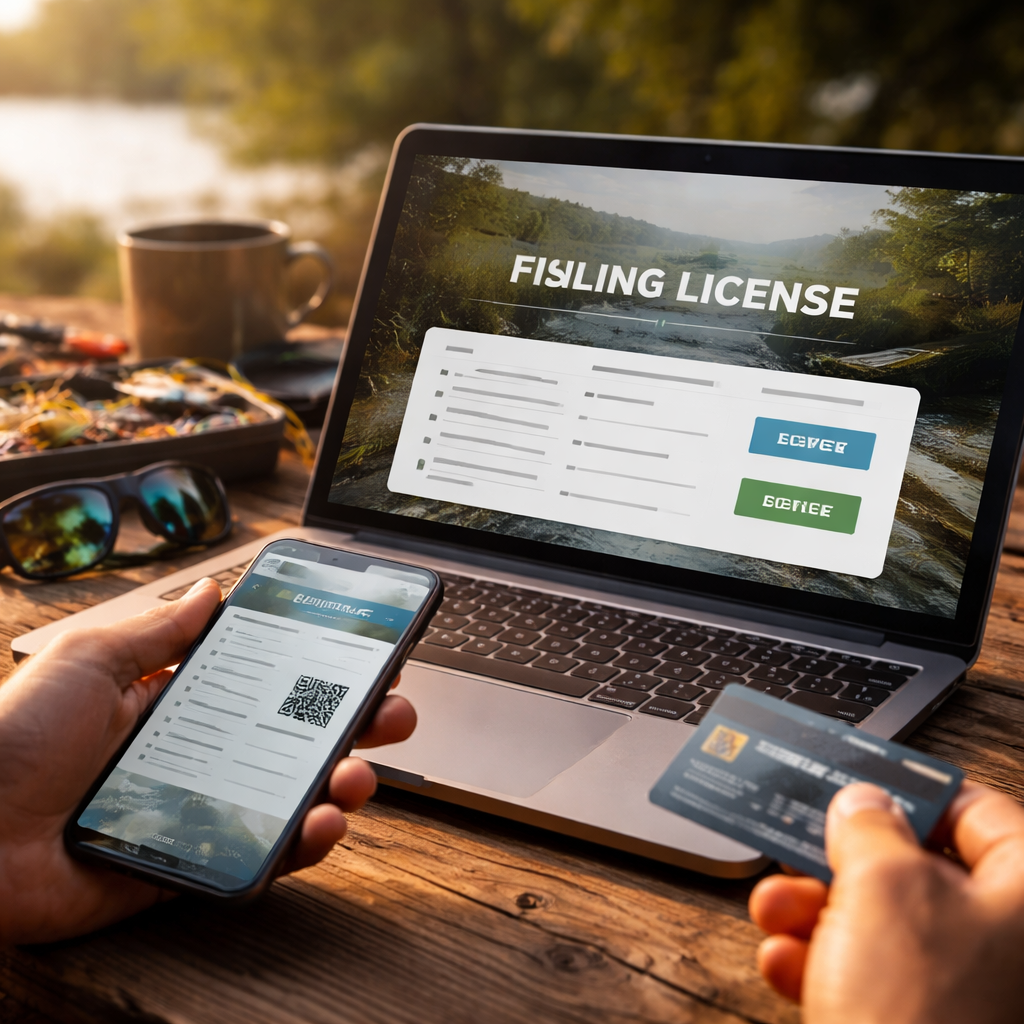
Planning a fishing trip but unsure where to start with paperwork? Knowing how to get a fishing license online can save you hours of standing in line at a local office — and in most states and countries, the entire process takes less than ten minutes from your couch. The digital shift in licensing systems has made it genuinely accessible, but there are still a few things worth knowing before you click “purchase.”
Why going online is the smarter move for most anglers
Not long ago, getting a fishing license meant driving to a sporting goods store or a government office, filling out a paper form, and hoping the clerk had the right license type in stock. Today, most state wildlife agencies and national fishing authorities have moved their licensing systems online — and for good reason.
Online platforms are available around the clock. Whether you’re planning a spontaneous early-morning trip or buying a license at midnight before a weekend getaway, the system doesn’t close. You get instant confirmation, and in most cases, a digital copy you can keep on your phone counts as valid proof.
In many U.S. states, a screenshot or PDF of your online fishing license is legally accepted by game wardens during inspections — no printed version required.
What you’ll need before you start the application
The application itself is simple, but having the right information on hand makes it even smoother. Here’s what most licensing portals will ask for:
- Full legal name and date of birth
- Residential address (this determines which state or regional license applies to you)
- A government-issued ID number (driver’s license or state ID is usually sufficient)
- Social Security Number or equivalent identification (required in some U.S. states)
- Payment method — most portals accept major credit and debit cards
If you’re purchasing for a child or another person, you’ll typically need their personal details as well. Some platforms allow multi-person purchases in a single session, which is handy for family fishing trips.
Step-by-step: how the online process actually works
Each region has its own portal, but the general flow is consistent across most platforms. Here’s what a typical purchase journey looks like:
- Go to your state’s or country’s official wildlife or fish and game agency website. Search for “[your state] fishing license online” to find the correct government portal — avoid third-party resellers when possible.
- Create an account or log in if you’ve purchased before. Many systems remember your details, making renewals even faster.
- Select the license type that matches your situation (see the table below for common options).
- Enter your personal details and confirm your residency status.
- Review the fees and complete the payment.
- Download or save your license confirmation. Most portals also send it to your email automatically.
Choosing the right license type: a quick reference
One of the most common sources of confusion is figuring out which license actually applies to your situation. The options vary by location, but these categories are standard across most jurisdictions:
| License Type | Who It’s For | Typical Validity |
|---|---|---|
| Annual Resident License | Residents of the state or region | 1 year from purchase or calendar year |
| Non-Resident License | Visitors or out-of-state anglers | 1 year or short-term (1–7 days) |
| Short-Term / Day License | Occasional or tourist anglers | 1 to 7 days |
| Senior License | Anglers above a certain age (varies by state) | Annual or lifetime |
| Combination License | Those who fish and hunt | 1 year |
| Lifetime License | Any resident (one-time purchase) | Lifetime |
If you’re fishing in saltwater versus freshwater, some regions require separate licenses or additional stamps — particularly for species like trout, salmon, or certain marine fish. Always double-check what’s needed for your specific target species and water body.
Common mistakes anglers make when buying online
Even a quick online process can go sideways if you’re not paying attention. These are the most frequent issues people run into:
- Buying a non-resident license when you qualify for the cheaper resident rate (or vice versa)
- Selecting the wrong water type — freshwater when you’re heading to a saltwater location
- Missing additional stamps or endorsements required for specific fish species
- Using a third-party website with service fees instead of the official government portal
- Not saving or downloading the confirmation before closing the browser
A quick fix: bookmark your state’s official wildlife agency website and go directly there every time. It eliminates the risk of landing on an unofficial reseller that charges extra fees for no added benefit.
What to know about fishing license reciprocity and out-of-state waters
Fishing near a state or provincial border? Reciprocity agreements between neighboring regions sometimes allow anglers with one valid license to fish in shared boundary waters without purchasing a second license. However, these agreements are specific and limited — they don’t apply to all waters, and they certainly don’t replace a proper non-resident license when you’re fishing well within another jurisdiction.
The safest approach is to check both states’ wildlife agency websites before you go. Most of them publish clear FAQ sections on reciprocal agreements and border water rules.
Before you cast your first line
Once you have your license sorted, it’s worth spending five minutes reviewing the local fishing regulations for the area you’re visiting. Bag limits, size restrictions, catch-and-release rules, and seasonal closures are all tied to your license but not automatically communicated during the purchase process. Most wildlife agencies publish a free annual regulations guide — both online and as a downloadable PDF.
Fishing regulations exist to protect fish populations and ensure the sport remains viable for future generations. Knowing them isn’t just a legal requirement — it’s part of being a responsible angler. And the good news is that the same website where you bought your license almost always has the regulations guide just a few clicks away.
Getting licensed online is straightforward, fast, and increasingly the default way anglers handle this part of trip preparation. The system is designed to work — you just need to know where to go and what to bring to the process.