
That sour, rotting smell creeping up from the sink is one of those kitchen problems nobody wants to deal with — but knowing how to fix a smelly garbage disposal is actually simpler than most people expect. The good news? You likely already have everything you need sitting in your pantry or under the sink.
Why Your Garbage Disposal Smells in the First Place
Before reaching for a cleaning product, it helps to understand what’s actually causing the odor. The smell rarely comes from the drain pipe itself. More often, it’s the buildup of food residue clinging to the rubber splash guard, the grinding components, and the walls of the disposal chamber.
Over time, small bits of food — especially proteins and fats — decompose inside the unit. This creates a breeding ground for bacteria, which are responsible for that unpleasant sulfur or sour smell. In humid environments, the process accelerates significantly.
The Most Effective Cleaning Methods
There’s no single “right” way to clean a garbage disposal, and the best approach often depends on how severe the buildup is. Here are the most reliable methods that plumbers and cleaning specialists actually recommend.
Ice and Salt Scrub
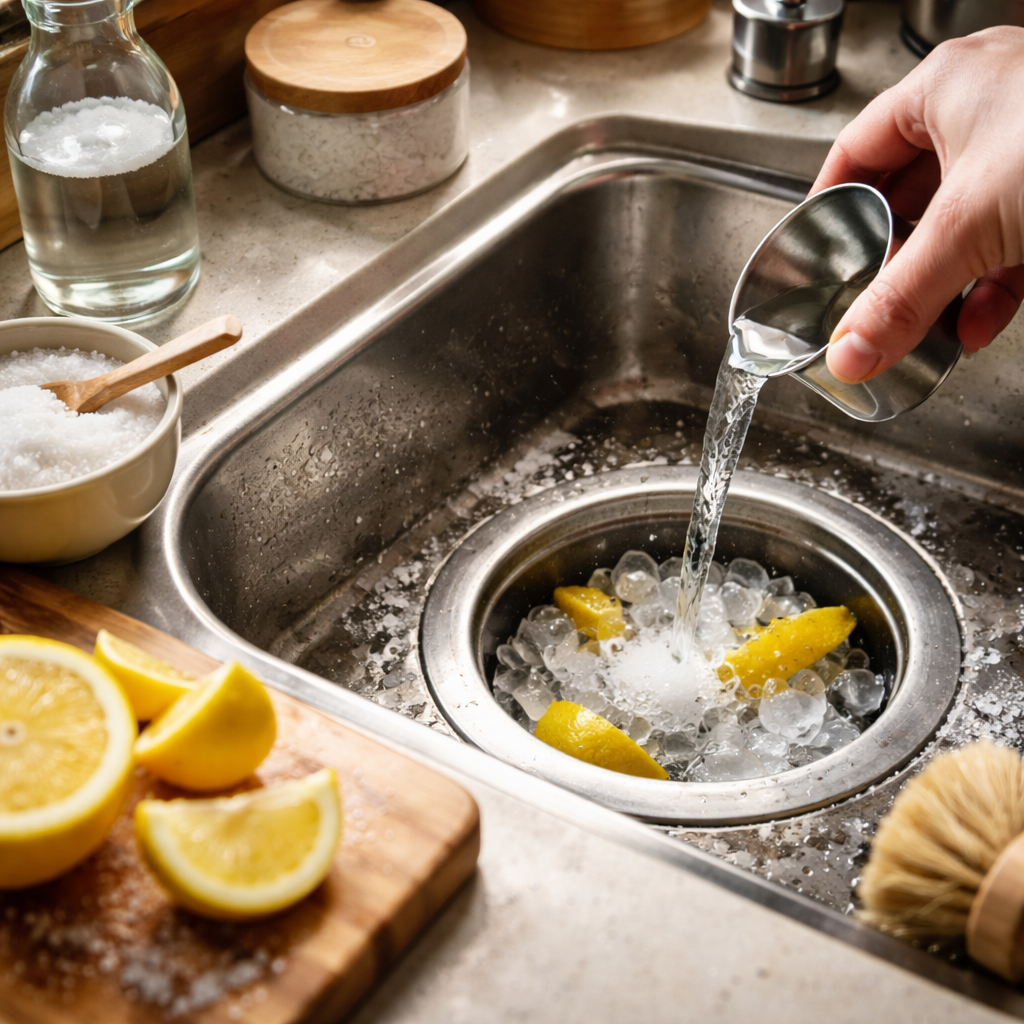
This is one of the most practical techniques for dislodging debris from the grinding components. Fill the disposal with a cup or two of ice cubes and add a generous handful of coarse salt. Run the disposal without water for about 10 seconds. The abrasive action of salt combined with the hardness of ice physically scrubs the internal surfaces, loosening buildup that water alone can’t remove.
Baking Soda and Vinegar Flush
Pour half a cup of baking soda directly into the disposal, followed by half a cup of white vinegar. The fizzing reaction helps break down grease and neutralize odors at a chemical level. Let the mixture sit for about 10–15 minutes, then flush with hot water while running the disposal.
Avoid using boiling water in a garbage disposal — it can soften and warp plastic components over time. Warm or hot tap water is sufficient and much safer.
Cleaning the Splash Guard
The rubber flap at the top of the disposal — also called the baffle or splash guard — is one of the most overlooked sources of odor. Food particles accumulate underneath and around its ridges, where water from normal rinsing rarely reaches.
To clean it properly, remove the splash guard if it’s detachable, and scrub both sides with a stiff brush and dish soap. If it can’t be removed, use an old toothbrush or a small scrubbing brush to get underneath the rubber flaps while the unit is turned off and unplugged.
Citrus Peels for a Natural Deodorizer
Grinding citrus peels — lemon, lime, or orange — is a popular natural deodorizing method. The essential oils released during grinding help mask and partially neutralize odors. It’s a short-term fix rather than a deep clean, but it works well as a weekly maintenance habit between thorough cleanings.
Run cold water for at least 30 seconds after every use of the disposal. Cold water helps solidify any fats or grease so they get chopped and flushed through rather than coating the internal walls. This single habit significantly reduces odor buildup over time.
What You Should Never Put Down a Garbage Disposal
Prevention is always easier than fixing a problem after it develops. Many of the worst disposal odors come from food items that should never go in there at all.
| Avoid These Items | Why They Cause Problems |
|---|---|
| Cooking grease and oil | Coats internal surfaces, traps food particles, causes persistent odor |
| Fibrous vegetables (celery, artichokes) | Fibers wrap around the grinding mechanism and rot |
| Eggshells | The membrane can stick to components and decompose |
| Coffee grounds | Accumulate in the drain pipe, contributing to clogs and smell |
| Starchy foods (pasta, rice, potatoes) | Expand with water and create a paste that coats the disposal |
How Often Should You Clean It?
There’s no strict rule, but most plumbing professionals suggest a light cleaning once a week and a more thorough scrub once a month. If your household uses the disposal heavily — grinding food scraps daily — you may need to clean it more frequently.
- Weekly: Run ice and salt, or grind citrus peels with cold water
- Monthly: Baking soda and vinegar flush plus scrubbing the splash guard
- As needed: Deep clean with a brush if odors persist despite regular maintenance
When Cleaning Isn’t Enough
If you’ve cleaned the disposal thoroughly and the smell keeps returning within a day or two, the issue might not be inside the unit itself. A persistent drain odor can point to buildup further down the pipe, a partially clogged P-trap, or even sewer gas entering through a poorly sealed drain connection.
In these cases, it’s worth pouring a pot of hot (not boiling) water mixed with dish soap directly down the drain to help clear the pipe. If the smell continues, a plumber can inspect the drain line and trap for deeper blockages or seal issues that cleaning products can’t resolve.
Keep It Fresh Without Much Effort
A clean, odor-free garbage disposal doesn’t require expensive products or hours of work. Most of the maintenance comes down to consistent small habits — flushing with cold water after each use, avoiding the wrong types of food waste, and doing a quick clean once a week. Once those become routine, the disposal essentially takes care of itself, and that unpleasant kitchen smell becomes a distant memory rather than a recurring problem.