
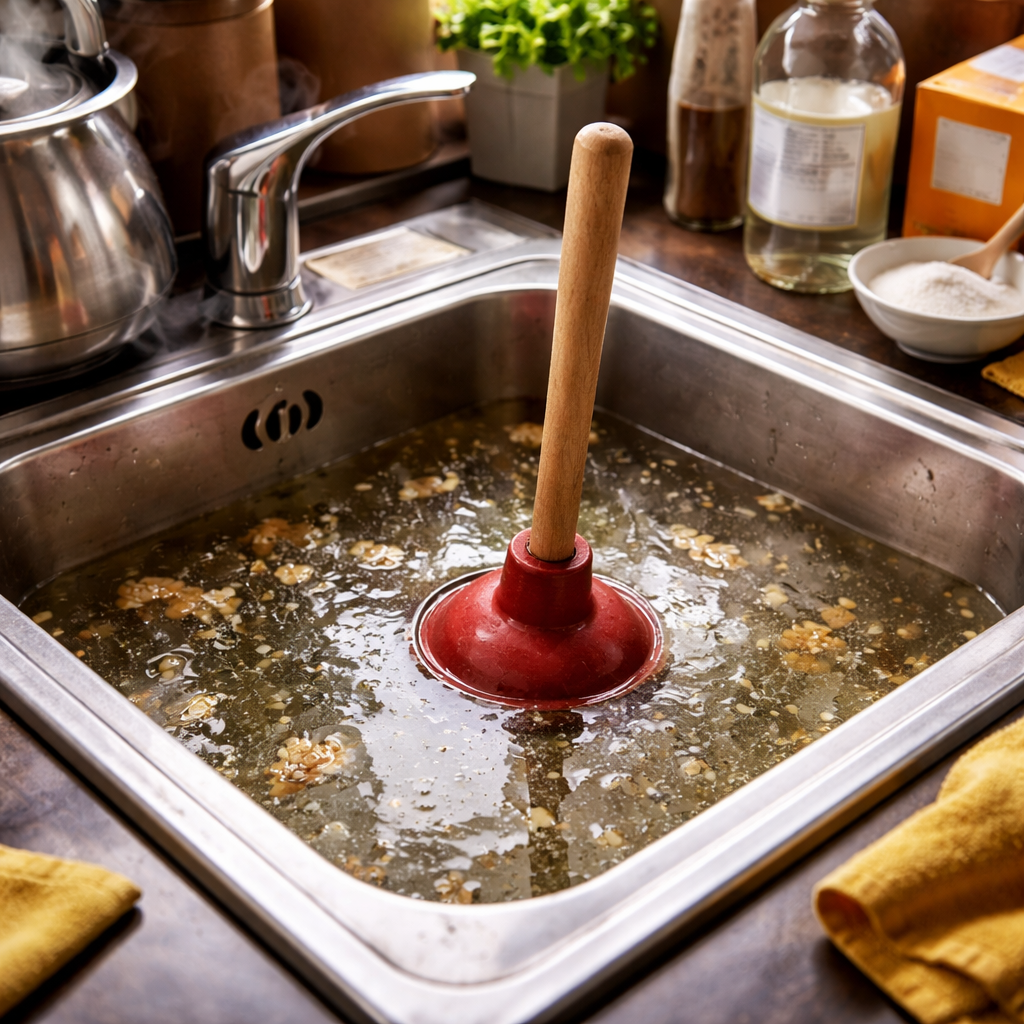
Most kitchen sink clogs don’t announce themselves — they just get worse. One day the water drains a little slow, and a week later you’re standing in front of a sink full of murky water wondering what went wrong. Knowing how to fix a clogged kitchen sink without calling a plumber can save you both time and money, and in most cases, the solution is simpler than you’d expect.
Why kitchen sinks clog in the first place
Before reaching for any tools, it helps to understand what’s actually happening inside your drain. Kitchen sink clogs are almost always caused by a combination of grease, food particles, and soap residue that gradually builds up on the inner walls of the pipe. Over time, this coating narrows the passage until water can barely flow through.
Cooking oils and fats are the most common culprits. When hot grease goes down the drain, it’s liquid — but as it cools, it solidifies and sticks. Coffee grounds, pasta, rice, and fibrous vegetable scraps add to the problem. Even dish soap contributes to buildup when it combines with hard water minerals and creates a stubborn residue.
Start with the simplest fix: boiling water
Before pulling out tools or chemicals, try the most basic approach. Boil a full kettle of water and pour it slowly down the drain in two or three stages, allowing each pour to work for about 30 seconds. This method works surprisingly well on grease-based clogs because heat melts the fatty buildup that holds everything together.
Keep in mind that this technique is safe for metal pipes but should be avoided if you have PVC plumbing, since extremely hot water can soften or damage plastic joints over time. In that case, use very hot tap water instead of boiling.
Baking soda and vinegar: a reliable combination
If hot water alone doesn’t clear the drain, the next step is a natural cleaning reaction using two things most people already have in the kitchen. This method is gentle on pipes, effective on moderate buildup, and doesn’t introduce harsh chemicals into your plumbing system.
Pour half a cup of baking soda directly into the drain, followed immediately by half a cup of white vinegar. Cover the drain opening with a cloth or stopper to direct the fizzing reaction downward, and let it sit for 15–20 minutes. Finish with a flush of hot water.
The chemical reaction between the acid in the vinegar and the alkaline baking soda creates a fizzing action that loosens debris and breaks down grease. It won’t dissolve a solid obstruction, but for partial clogs and slow drains it works well as both a fix and a preventive measure.
Using a plunger correctly
A standard cup plunger — the type with a flat rubber cup — is the right tool for a kitchen sink. Many people use plungers incorrectly and wonder why they don’t work. The key is creating a proper seal and using controlled, steady pressure rather than aggressive force.
- Fill the sink with just enough water to cover the rubber cup of the plunger
- If you have a double sink, block the second drain with a wet cloth to prevent air from escaping
- Place the plunger directly over the drain and press down firmly to create a seal
- Pump up and down with consistent strokes for about 20–30 seconds
- Pull the plunger up sharply on the final stroke to dislodge the clog
- Run hot water to flush out whatever was loosened
Repeat this process two or three times if needed. A plunger is most effective when the clog is located close to the drain opening rather than deep in the pipe.
Checking and cleaning the P-trap
If plunging doesn’t help, the blockage is likely sitting in the P-trap — the curved section of pipe beneath the sink that holds a small amount of water to prevent sewer gases from entering your home. This is the most common location for solid debris like food scraps, small objects, or accumulated grease.
Cleaning the P-trap is easier than most people expect, and no special tools are required beyond a bucket and possibly slip-joint pliers.
| Step | What to do |
|---|---|
| 1 | Place a bucket under the P-trap to catch water and debris |
| 2 | Unscrew the slip nuts at both ends of the curved pipe by hand or with pliers |
| 3 | Remove the P-trap and empty its contents into the bucket |
| 4 | Clean the inside of the trap with a bottle brush or old toothbrush |
| 5 | Check the pipe openings on both sides for additional buildup |
| 6 | Reattach the P-trap securely and run water to test for leaks |
Once the trap is back in place, run cold water for a full minute to confirm everything is flowing freely and no joints are leaking. If you notice dripping after reassembly, gently tighten the slip nuts a bit more — overtightening can crack plastic fittings, so don’t force them.
When to use a drain snake
A manual drain snake, also called a plumber’s auger, is the tool to reach for when the clog is deeper in the pipe and the P-trap is clear. You insert the flexible metal cable into the drain, turn the handle to push it forward, and the corkscrew tip either breaks up the clog or grabs it so you can pull it out.
Basic drain snakes are inexpensive and available at any hardware store. They’re particularly useful for stubborn blockages caused by accumulated soap scum and grease further along the drainpipe. After snaking, flush the pipe thoroughly with hot water to clear out any remaining debris.
A word on chemical drain cleaners
Liquid drain cleaners are widely available and heavily marketed, but they come with trade-offs worth considering. Most commercial products use either caustic chemicals like sodium hydroxide or acidic compounds that generate heat to dissolve organic material. While they can work on certain types of clogs, repeated use can corrode metal pipes and degrade rubber seals.
They’re also not effective on every type of blockage — if a solid object is lodged in the pipe, no chemical will help. If you do choose to use a chemical cleaner, follow the manufacturer’s instructions precisely, never mix different products, and ventilate the area well. They should be a last resort before calling a professional, not a first response.
Keeping your kitchen drain clear going forward
Fixing the immediate problem is only half the task. A few consistent habits make a real difference in preventing future clogs from forming in the first place.
- Never pour cooking grease or oil down the drain — collect it in a jar and dispose of it in the trash
- Use a mesh drain strainer to catch food particles before they enter the pipe
- Run hot water for 30 seconds after washing greasy dishes
- Do a baking soda and vinegar flush once a month as a maintenance routine
- Avoid putting fibrous foods like celery, onion skins, or pasta into the sink in large amounts
None of these steps require extra effort once they become habit. A drain strainer alone can dramatically reduce the frequency of blockages, and it costs almost nothing. The real secret to a clear kitchen drain isn’t a special product — it’s just being mindful about what goes into it in the first place.