
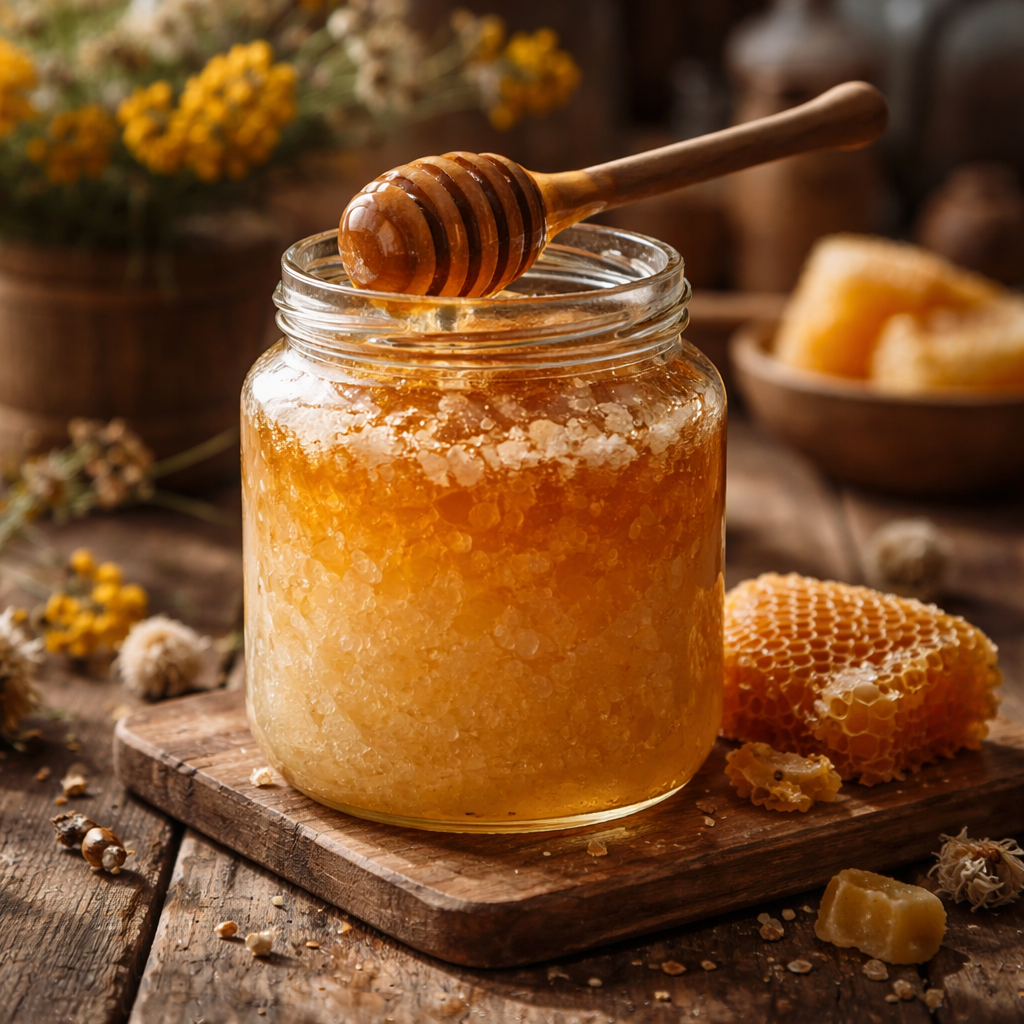
Most people toss out honey the moment it crystallizes or sits in the pantry past a year — and that’s a costly mistake. The facts about honey and its shelf life tell a surprisingly different story from what food labels or gut instincts suggest. Honey is one of the few foods on Earth that doesn’t spoil under the right conditions, and understanding why can completely change how you store and use it.
Why honey resists spoilage in the first place
The secret lies in honey’s chemistry. Raw honey contains very little moisture — typically between 17% and 20% water content — which makes it an inhospitable environment for bacteria and microorganisms. On top of that, honey is naturally acidic, with a pH ranging from about 3.2 to 4.5. This combination of low moisture and high acidity creates conditions where almost nothing harmful can survive or reproduce.
Bees also add an enzyme called glucose oxidase during honey production. When honey comes into contact with moisture, this enzyme produces small amounts of hydrogen peroxide — a natural antimicrobial compound. So honey essentially protects itself from within, which is remarkable for a food product.
Archaeologists have found honey in ancient Egyptian tombs that was still perfectly edible after thousands of years. That’s not a legend — it’s a documented archaeological fact.
Crystallization is not a sign of spoilage
One of the most widespread misconceptions about honey is that crystallization means the product has gone bad. In reality, crystallization is a completely natural physical process. Honey is a supersaturated sugar solution, meaning it contains more dissolved sugar than water can normally hold. Over time, glucose molecules separate from the water and form crystals — this is simply chemistry at work.
Different varieties of honey crystallize at different rates. Clover honey tends to crystallize relatively quickly, while acacia honey can stay liquid for a much longer time due to its higher fructose-to-glucose ratio. Neither is better or safer than the other — they’re just different.
What actually affects honey’s longevity
While honey can technically last indefinitely, the way it’s stored makes a significant difference in maintaining its flavor, aroma, and nutritional value. Here are the key factors that determine how well your honey holds up over time:
- Moisture exposure — introducing water into honey (even from a wet spoon) can trigger fermentation and allow yeast to grow
- Direct sunlight — UV light degrades antioxidants and speeds up the breakdown of enzymes
- Heat — temperatures above 40°C start to degrade beneficial compounds, including natural enzymes and phenolic antioxidants
- Container type — glass jars are far superior to plastic for long-term storage, as plastic can interact with honey’s acids over time
- Contamination — double-dipping or using dirty utensils introduces bacteria and organic material that can compromise the honey
Store honey in a sealed glass container, away from heat sources and light, at room temperature. A kitchen cupboard away from the stove is ideal. Under these conditions, properly stored honey maintains its quality almost indefinitely.
Raw vs. processed honey: does it matter for shelf life?
Not all honey is created equal, and the difference between raw and commercially processed honey goes beyond marketing. Raw honey is minimally filtered and not pasteurized, which means it retains its natural enzymes, pollen, propolis traces, and higher antioxidant content. Processed honey, on the other hand, is typically heated and ultra-filtered to prevent crystallization and extend visual appeal on store shelves.
| Feature | Raw Honey | Processed Honey |
|---|---|---|
| Enzyme content | High | Reduced or absent |
| Pollen present | Yes | Usually removed |
| Crystallization speed | Faster | Slower |
| Shelf life potential | Indefinite (if stored correctly) | Indefinite (if stored correctly) |
| Nutritional value | Higher | Lower |
From a shelf life standpoint, both types last equally long if stored properly. The difference shows up in nutritional content and flavor complexity, not in spoilage risk.
How to tell if honey has actually gone bad
Genuine spoilage in honey is rare but not impossible. The most common cause is fermentation, which happens when honey absorbs too much moisture and wild yeast begins to activate. Signs that honey may have fermented include a noticeably sour or off smell, bubbling inside the jar, or a taste that’s clearly alcoholic or unpleasant.
Mold growth is another red flag, though it almost always results from contamination — someone introducing bread crumbs, fruit particles, or other organic matter into the jar. If you notice visible mold, it’s best to discard that batch entirely.
Reading expiration dates on honey jars
If you’ve ever noticed a “best before” date on a honey jar and wondered what it actually means, you’re not alone. Manufacturers are often legally required to print best-before dates on packaged food products, but honey is genuinely one of the few foods where that date reflects quality preference rather than safety. After the stated date, honey might lose some of its delicate floral notes or darken in color — it won’t become unsafe to eat.
Darkening of honey over time is a natural result of the Maillard reaction — the same chemical process that browns bread when toasted. It’s purely cosmetic and doesn’t indicate spoilage or reduced safety.
A food that earned its place in every pantry
Honey’s durability isn’t just a convenient quirk — it’s the result of a precise biological and chemical system refined over millions of years of bee evolution. When you understand the science behind it, using honey wisely becomes second nature: keep it sealed, keep it dry, keep it away from heat, and it will outlast almost everything else in your kitchen. That’s not an exaggeration — it’s simply what the evidence shows.
And the next time you find a jar that’s been sitting in the back of the cupboard for two years, don’t throw it away before giving it a proper look and smell. Chances are, it’s perfectly fine.