
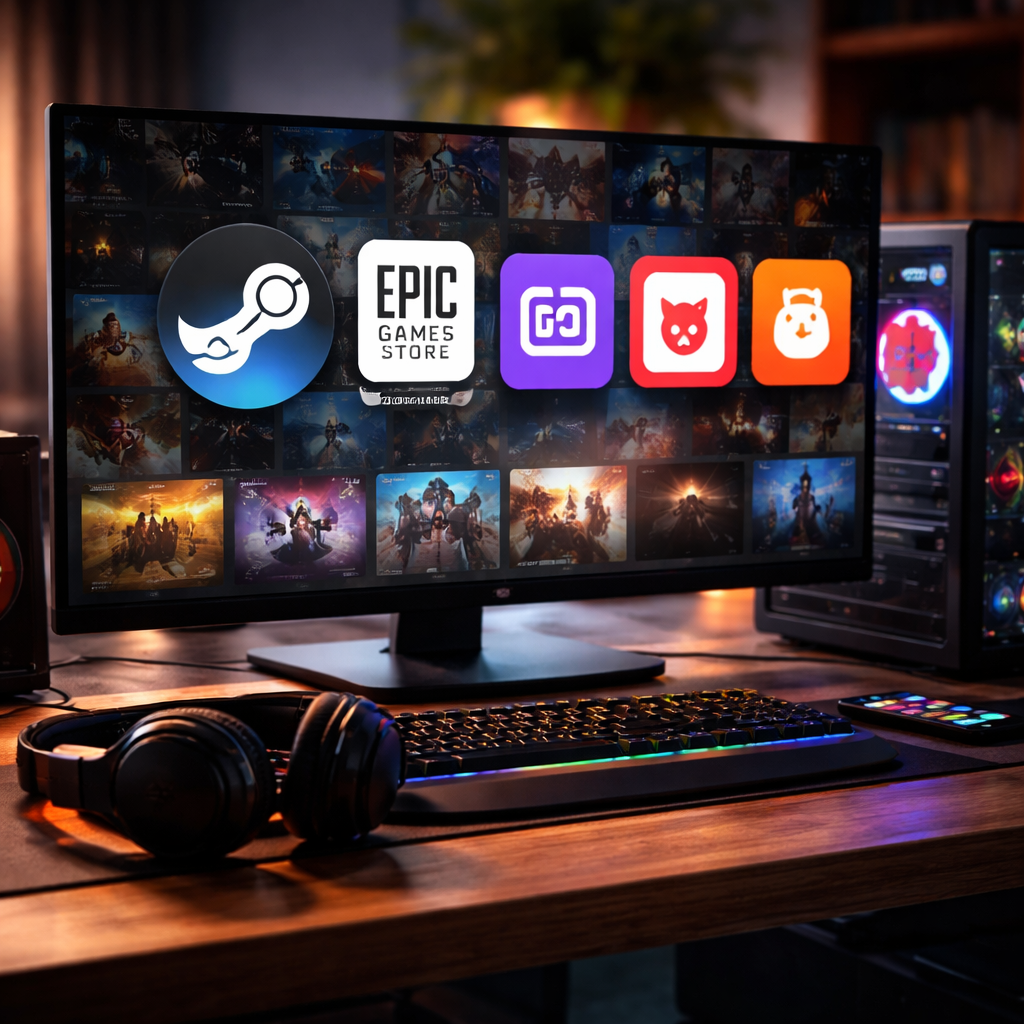
Most gamers have never seriously questioned whether there’s a better alternative to Steam — it just works, it’s familiar, and the library is enormous. But when you start digging into what other platforms actually offer, the picture gets a lot more interesting than you’d expect.
Why People Start Looking Beyond Steam in the First Place
Steam dominates PC gaming, but that dominance comes with real friction. Regional pricing inconsistencies, refund policy limitations, a cluttered discovery system, and DRM restrictions are just some of the reasons players and developers alike start exploring other options. Add to that the occasional controversy around curation policies and data privacy concerns, and you’ve got a growing audience genuinely curious about what else is out there.
It’s not about abandoning Steam entirely. It’s about understanding the full landscape — knowing when another platform serves you better, offers a cleaner deal, or simply has something Steam doesn’t.
The Main Platforms Worth Your Attention
The PC gaming storefront market has matured significantly. These are the platforms that have earned genuine traction among players and developers:
| Platform | Best Known For | Revenue Split (Developer) |
|---|---|---|
| GOG | DRM-free games, classic titles | 70% |
| Epic Games Store | Free weekly games, exclusives | 88% |
| itch.io | Indie games, pay-what-you-want | Up to 100% |
| Humble Store | Bundle deals, charity component | ~75% |
| Amazon Games | Prime Gaming perks, original titles | Varies |
Each of these platforms has carved out a distinct identity. Understanding what they prioritize tells you a lot about whether they’ll match your needs as a player.
GOG: The DRM-Free Argument
GOG, operated by CD Projekt, built its entire identity around one principle: you own what you buy. No always-online requirement, no launcher dependencies — just the game files on your machine. This matters more than it sounds when you consider how many purchased Steam games have become inaccessible after server shutdowns or account suspensions.
GOG’s catalog includes thousands of classic PC titles, many of which have been lovingly patched for modern systems. If you’re the kind of person who wants to play a 1998 strategy game on a current OS without hunting down unofficial patches, GOG is genuinely the best place to be.
Ownership matters in digital gaming. When a platform shuts down or changes its terms, DRM-free games remain playable. That’s not a minor perk — it’s a philosophical stance on what buying a game should actually mean.
Epic Games Store: Aggressive Strategy, Real Benefits
Epic entered the PC storefront space with a clear strategy: undercut Steam on developer revenue share and spend heavily on exclusives and free game giveaways. The result is a platform that many players use purely for the rotating free game offers, which have included some genuinely premium titles over the years.
The platform is still maturing. Social features, wishlist functionality, and review systems are less developed than Steam’s. But for developers, that 88% revenue share versus Steam’s standard 70% is a meaningful difference, especially for smaller studios working on tight margins.
itch.io: A Different Kind of Gaming Space
itch.io operates on a completely different philosophy from any major storefront. It’s an open marketplace where developers set their own prices, choose their own revenue splits, and publish without gatekeeping. The result is a chaotic, creative, and often surprising catalog that includes experimental games, interactive fiction, game jams, and tools you won’t find anywhere else.
For players interested in indie gaming beyond what gets featured on Steam’s front page, itch.io is essentially unmissable. The platform regularly hosts charity bundles that offer hundreds of games for a single low price, with proceeds going to vetted causes.
- No mandatory launcher — most games download directly as files
- Developers can offer pay-what-you-want pricing
- Strong community around game jams and experimental work
- Optional desktop app for managing your library
- Transparent revenue model — developers choose their own split
Humble Store and Bundle Culture
Humble Store built its reputation on the bundle model — curated collections of games sold at a sliding price, often with a portion going to charity. That model still exists, though the platform has evolved considerably. Today it operates as a full storefront alongside its bundle offerings, and a subscription tier called Humble Choice gives members access to a curated monthly selection of games.
One notable detail: many games purchased through Humble Store deliver Steam keys, which means you’re not necessarily choosing between platforms — you’re just buying through a different retailer and adding to your Steam library anyway. This makes Humble Store a practical tool for finding discounts rather than a full Steam replacement.
What Actually Matters When Choosing a Platform
The honest answer is that most regular players don’t need to commit to just one platform. The more useful question is: what do you actually want from a gaming storefront? The answer shapes everything.
- If you care about game ownership and preservation, GOG is the clearest choice
- If you want the widest catalog and best social features, Steam remains the benchmark
- If you’re interested in independent and experimental games, itch.io fills a gap nothing else does
- If you’re a developer, Epic’s revenue share makes a serious financial case for consideration
- If you want deals and bundles, Humble Store is worth checking regularly
There’s no universal winner here. The platforms that thrive are the ones that do something distinctly well rather than trying to replicate Steam wholesale. That’s actually good news for players — competition drives better pricing, better policies, and more innovation across the board.
The Bigger Picture for PC Gaming
The PC game distribution space isn’t a zero-sum competition. Many players maintain libraries across three or four platforms simultaneously, picking each one for what it does best. That kind of platform fluency — knowing where to look for what — is genuinely useful and increasingly common among experienced PC gamers.
What’s encouraging is that the presence of multiple viable storefronts has pushed the entire industry toward better terms for developers, more consumer-friendly refund policies, and greater transparency. Steam itself has made improvements in response to competitive pressure. That’s how healthy markets are supposed to work.
So rather than asking which platform wins, the smarter move is building a clear picture of what each one offers — and letting that shape where you spend your money and time. The options are genuinely good right now, and knowing your way around all of them puts you in a far stronger position than loyalty to any single launcher ever will.