
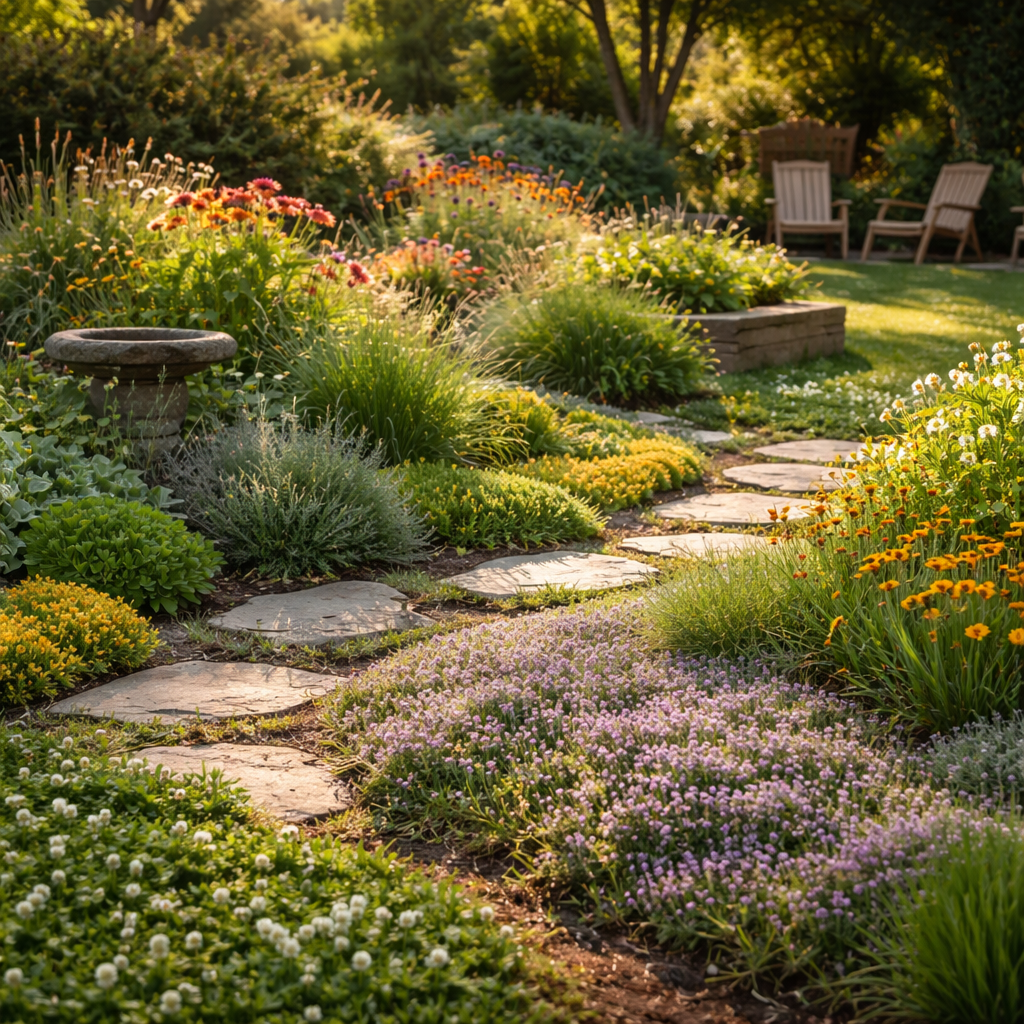
Grass lawns consume more water, fertilizer, and maintenance time than almost any other landscaping choice — yet millions of homeowners treat them as the default option. If you’ve been wondering whether there’s a smarter, more sustainable path forward, you’re not alone. Searching for a genuine alternative to lawns has become one of the most practical questions in modern gardening, and the answers are far more interesting than simply pulling up turf and planting something else.
Why So Many Gardeners Are Rethinking the Traditional Lawn
The appeal of a neat green lawn is understandable — it’s tidy, it’s familiar, and it works as a blank canvas. But once you start looking at what it actually costs — in water bills, weekend hours, chemical treatments, and environmental impact — the picture shifts considerably. Turf grass supports very little biodiversity. It doesn’t feed pollinators, it rarely holds soil well on slopes, and in drought-prone regions it simply struggles to survive without constant intervention.
That’s not a reason to feel guilty about the lawn you already have. It’s simply a good reason to explore what else is possible, especially if you’re starting fresh, renovating a garden, or just tired of mowing every other weekend with nothing much to show for it.
Ground Covers That Actually Work
One of the most effective shifts you can make is replacing turf with low-growing ground cover plants. These spread naturally, suppress weeds, and once established, need almost no maintenance. The key is choosing species suited to your climate and soil type rather than copying what works in someone else’s garden.
- Creeping thyme — tolerates foot traffic, attracts bees, and releases a mild fragrance when walked on
- Clover (white or micro clover) — fixes nitrogen in the soil, stays green in dry spells, and supports pollinators
- Creeping Jenny — works beautifully in shaded or damp areas where grass rarely thrives
- Moss — ideal for cool, shady environments; requires zero mowing and creates a lush, carpet-like effect
- Sedum varieties — drought-tolerant succulents that form dense mats and produce small seasonal flowers
None of these are exotic or difficult to source. Most are available at garden centers, and several can be established from plugs or seed at relatively low cost. The transition period — usually one to two growing seasons — is the part that requires some patience, but the long-term payoff in reduced upkeep is significant.
Native Plant Gardens and Meadow-Style Planting
A native plant garden isn’t a wild, unkempt mess — though it can be, if that’s what you’re going for. More often, it’s a thoughtfully designed space filled with plants indigenous to your region that have evolved to thrive in local conditions without much human help. They handle rainfall patterns, local pests, and soil composition in ways that imported ornamentals simply can’t match.
A well-designed native garden can reduce outdoor water use by up to 50–75% compared to a conventional lawn, according to research from the Environmental Protection Agency’s WaterSense program.
Meadow-style planting takes this a step further by mimicking the structure of natural grasslands — mixing flowering perennials, ornamental grasses, and self-seeding annuals into a layered planting that looks intentional rather than abandoned. This approach is particularly effective for larger properties or front gardens where you want visual impact with minimal intervention.
Hard Landscaping Done Thoughtfully
Not every garden alternative needs to involve plants. For areas with heavy foot traffic, shaded spots where nothing grows well, or compact urban spaces, hard landscaping offers practical and attractive solutions. The key word here is “thoughtfully” — because the wrong choices can create drainage problems, heat islands, or spaces that feel sterile and unwelcoming.
| Surface Type | Best Use Case | Key Consideration |
|---|---|---|
| Gravel or pea shingle | Low-traffic areas, dry gardens | Needs edging to stay contained; can shift underfoot |
| Permeable pavers | Driveways, pathways, patios | Allows rainwater to drain through — better for the environment |
| Decomposed granite | Informal paths, Mediterranean-style gardens | Compacts well; low cost; needs occasional topping up |
| Bark mulch or wood chips | Under trees, play areas, informal beds | Suppresses weeds; breaks down over time and feeds the soil |
Mixing hard and soft landscaping almost always produces better results than going entirely one direction. A gravel garden with clumps of ornamental grasses and drought-tolerant perennials, for instance, can feel far more alive and interesting than a sea of paving slabs — while still requiring almost no maintenance.
Edible Landscaping: Where Utility Meets Aesthetics
One approach that tends to surprise people with how well it works is replacing lawn with edible planting. This doesn’t mean turning your garden into an allotment. It means integrating fruit trees, berry bushes, herbs, and even vegetables into a design that looks attractive and functions as a productive space.
Strawberries make an excellent ground cover and produce fruit. Dwarf apple or pear trees provide structure and seasonal interest. Raised beds filled with herbs — rosemary, lavender, sage — offer fragrance, culinary value, and year-round texture. The concept, sometimes called “forest gardening” or “permaculture design,” is well-documented and has been practiced at various scales, from small urban plots to large rural properties.
Practical tip for getting started:
Rather than removing your entire lawn at once, try starting with one defined area — perhaps a corner or a strip along a fence. Establish your chosen alternative there, observe how it performs through the seasons, then expand gradually. This low-risk approach lets you build confidence and refine your choices before committing fully.
The Biodiversity Argument You Can’t Easily Ignore
Conventional lawns are, ecologically speaking, fairly barren. A monoculture of ryegrass or fescue offers little to insects, birds, or soil organisms. When you introduce even modest diversity — a patch of clover here, a wildflower strip there — the change in insect activity alone can be noticeable within a single season.
This matters beyond just feeling good about your garden. Pollinators are under genuine pressure in many parts of the world, and private gardens collectively represent a substantial amount of land that could either help or hinder their populations. Choosing lawn alternatives that support habitat and food sources for insects is one of the most accessible contributions an individual gardener can make.
Starting Small Is Still Starting
There’s no rule that says you have to replace everything at once, or that you need to commit to a single approach. Many people find the most satisfying results come from a gradual transformation — reducing the lawn year by year, experimenting with different plants and surfaces, and letting the garden evolve in response to how they actually use the space.
The hardest part is usually making the first decision. Once you’ve tried one alternative and watched it establish itself — once the creeping thyme flowers in summer or the native meadow patch hums with insects on a warm afternoon — the motivation to keep going tends to arrive on its own.
Your garden doesn’t have to look like anyone else’s, follow a trend, or meet some external standard of what a garden should be. It just has to work for you, your local environment, and ideally, for the small ecosystem you’re part of whether you think about it or not.