
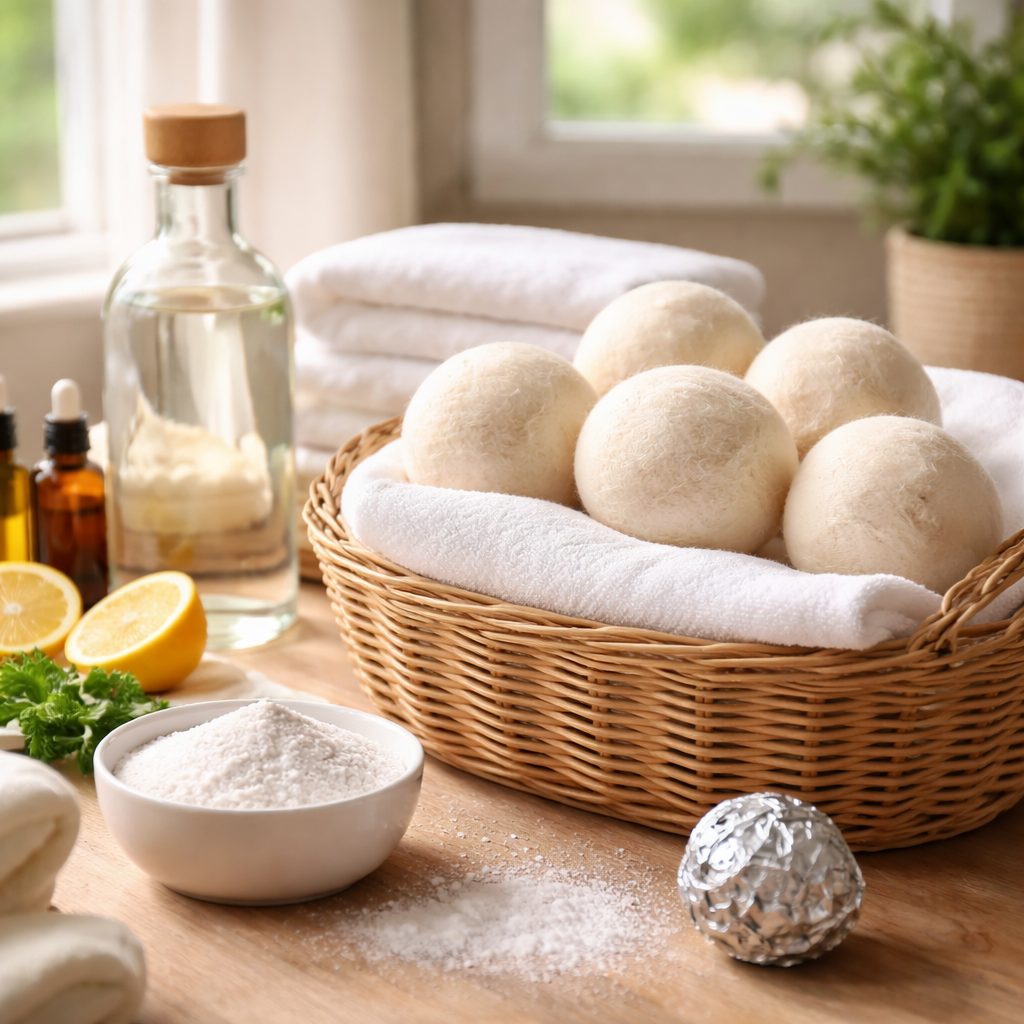
Most dryer sheets are made from synthetic fibers soaked in chemical softeners and artificial fragrances — and once you start looking for an alternative to dryer sheets, it becomes clear just how many effective, cleaner options exist that work equally well without the waxy residue or potential irritants left on your laundry.
Why people are moving away from conventional dryer sheets
It’s not just a trend driven by eco-conscious marketing. Many people report skin irritation, allergic reactions, or simply find that dryer sheets leave a coating on towels that reduces their absorbency over time. Others are bothered by the strong synthetic fragrance that clings to fabric. And for households with babies, pets, or anyone with sensitive skin, the chemical load of a typical dryer sheet starts to feel less acceptable the more you look into it.
Beyond personal health considerations, there’s also the environmental angle. Most commercial dryer sheets are single-use and non-recyclable — a small but consistent source of household waste. So whether you’re switching for health reasons, sustainability, or simply to cut costs, the good news is that the alternatives are genuinely solid.
Wool dryer balls: the most popular swap
Wool dryer balls are probably the most widely recognized replacement, and they’ve earned that reputation for good reason. They work by physically separating clothes as they tumble, which improves airflow and reduces drying time — typically by 10 to 25 percent depending on load size and dryer model. They also soften fabric through gentle mechanical action rather than chemical coating.
A set of six wool dryer balls can last for hundreds of cycles, making them a cost-effective choice in the long run. If you want a light scent, you can add a few drops of essential oil directly to the balls before tossing them in — lavender, eucalyptus, and cedarwood are popular picks. Just let the oil absorb for a few minutes first so it doesn’t transfer as a stain.
Wool dryer balls reduce static, soften clothes, and cut drying time — all without a single chemical additive.
What actually causes static, and how to deal with it naturally
Static cling in laundry happens when different fabrics rub against each other in a dry, heated environment and build up an electrostatic charge. Dryer sheets combat this with chemical agents that coat the fabric surface — but there are other ways to interrupt that process.
One of the simplest tricks is to slightly underdry your laundry. Removing clothes when they’re just barely dry rather than bone-dry significantly reduces static buildup. Another approach is to separate synthetic fabrics from natural ones, since synthetics are the main culprits for generating static charge.
| Method | Static reduction | Fabric softening | Reusable |
|---|---|---|---|
| Wool dryer balls | Good | Yes | Yes |
| Aluminum foil ball | Very good | No | Yes (limited) |
| White vinegar in rinse | Moderate | Yes | N/A |
| Air drying | Excellent | No | N/A |
| Baking soda in wash | Low | Moderate | N/A |
White vinegar: the underrated laundry helper
Adding half a cup of white distilled vinegar to your washing machine’s rinse cycle works as a natural fabric softener by breaking down detergent residue and relaxing fabric fibers. It doesn’t leave a vinegar smell on clothes once they dry — that’s a common concern that turns out to be unfounded in practice. The acetic acid evaporates during drying.
Vinegar is particularly good for towels and bedding, where you want softness without losing absorbency. It’s worth noting that vinegar should not be used alongside bleach or hydrogen peroxide in the same cycle, as combining these creates fumes that are harmful to inhale.
Aluminum foil balls: an unexpected but effective option
This one surprises a lot of people. Crumpling a sheet of aluminum foil into a ball roughly the size of a tennis ball and tossing it in the dryer helps neutralize static electricity. The foil acts as a conductor that dissipates the charge as it builds up. It doesn’t soften clothes, but if static is your main complaint with ditching dryer sheets, this is one of the easiest and cheapest fixes available.
One foil ball can typically last several weeks of regular use before it needs to be replaced. Make sure it’s tightly compressed so it doesn’t unfurl and potentially snag on delicate items.
Baking soda in the wash cycle
Baking soda added directly to your laundry load — about a quarter to half a cup per wash — acts as a mild water softener and helps balance pH levels in the wash water. This can result in clothes that feel softer and smell fresher without any synthetic fragrance additives. It’s especially useful in areas with hard water, where mineral buildup can leave clothes feeling stiff.
Baking soda pairs well with a natural laundry detergent and doesn’t interfere with most washing machine types. However, don’t mix it directly with vinegar in the drum at the same time — they neutralize each other and lose their individual benefits. Use one per cycle, not both.
Air drying: the zero-input solution
It might sound obvious, but line drying or rack drying eliminates static entirely because static cling only develops in a heated tumble dryer environment. Air-dried clothes also last longer — the mechanical action of a dryer gradually breaks down fabric fibers, which is why your lint trap fills up. That lint is literally pieces of your clothing.
- Line drying outdoors gives clothes a naturally fresh scent from airflow
- Indoor drying racks work year-round and add humidity to dry indoor air in winter
- Delicate items like wool, silk, and lace last significantly longer when air dried
- No energy cost and no wear on the machine
If you find air-dried clothes feel a bit stiff — particularly towels — giving them a quick five-minute tumble at low heat after air drying solves that without the need for any softening agent at all.
Choosing what actually fits your laundry routine
There’s no single best swap for everyone. If softness is your priority, white vinegar or wool dryer balls are the strongest options. If static is the main issue, aluminum foil balls or slightly underdrying your load will do the job. If you’re dealing with hard water and stiff fabrics, baking soda in the wash is worth trying first.
The most practical approach for many households turns out to be combining two methods — for example, wool dryer balls plus occasional vinegar in the rinse — rather than expecting one solution to do everything a dryer sheet used to do. Once you find what works for your water type, machine, and fabric mix, the switch tends to stick pretty easily.