
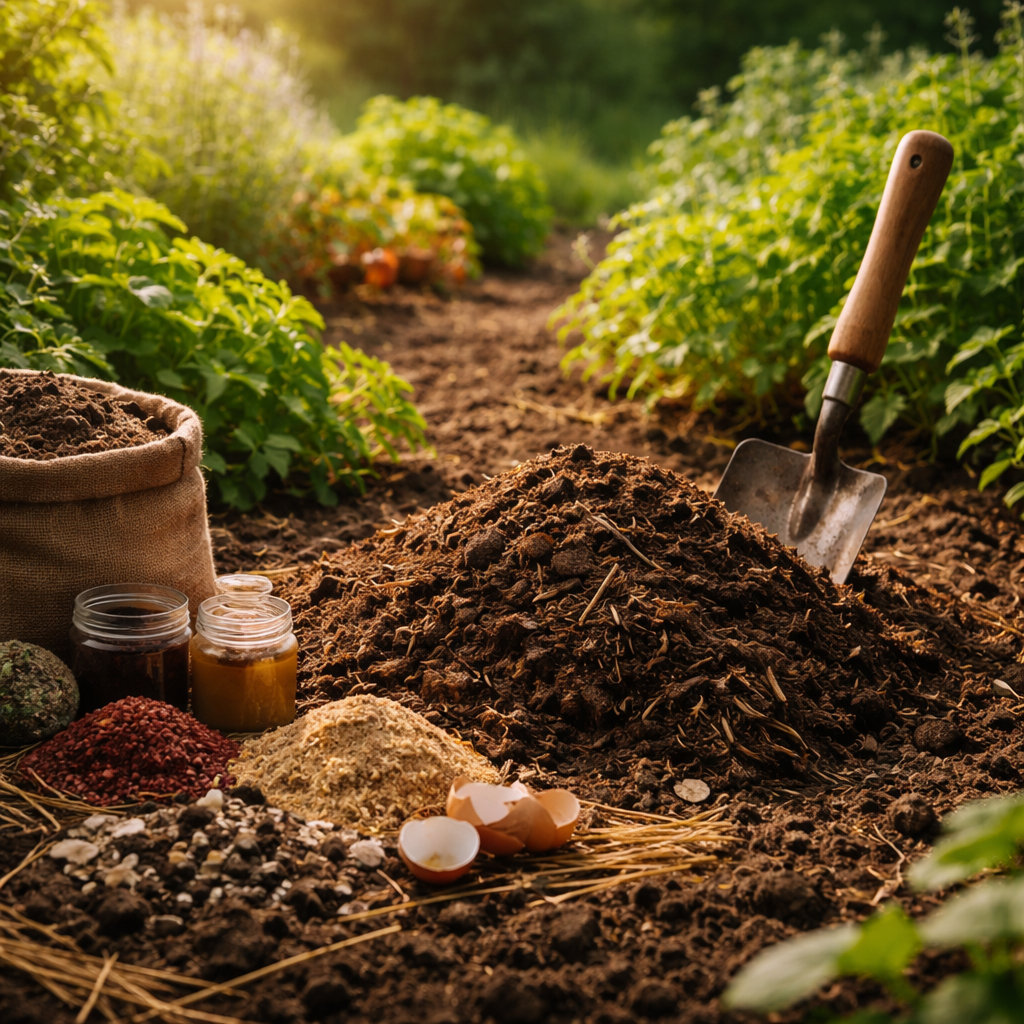
Soil that depends entirely on synthetic inputs tends to degrade over time — and that’s not an opinion, it’s a well-documented agricultural reality. If you’ve been exploring an alternative to chemical fertilizers, you’re likely motivated by more than just cost savings: healthier produce, longer soil life, and a growing awareness that what goes into the ground eventually ends up on the plate.
Why the shift away from synthetic nutrients makes practical sense
Conventional fertilizers deliver nutrients fast — that’s their appeal. But speed comes with trade-offs. Excessive nitrogen application leaches into groundwater, disrupts soil microbiology, and creates a dependency cycle where the soil loses its natural fertility over seasons. Farmers and gardeners who have transitioned to organic soil amendments often report that the first year feels slower, but by the second or third growing cycle, the soil starts working with the plants rather than just feeding them from outside.
The science behind this is grounded in soil ecology. Healthy soil contains billions of microorganisms per teaspoon — bacteria, fungi, protozoa — that break down organic matter and make nutrients available to plant roots in a form that’s far more bioavailable than a synthetic salt solution. When you feed the soil rather than the plant, you’re investing in a system, not just a season.
Organic matter as the foundation of natural fertility
Compost is the most widely used and studied natural soil amendment available. Made from decomposed organic waste — kitchen scraps, yard trimmings, straw, manure — it improves soil structure, water retention, and microbial activity simultaneously. Unlike synthetic fertilizers, compost releases nutrients gradually, reducing the risk of root burn and nutrient runoff.
“Feeding the soil is not a metaphor — it’s a measurable process. Compost applications consistently increase cation exchange capacity, which means the soil holds onto nutrients better and releases them more efficiently to plant roots.”
Vermicompost — compost produced by earthworms — takes this a step further. It contains plant growth hormones, beneficial bacteria, and humic acids at concentrations significantly higher than standard compost. Small-scale growers and home gardeners often find vermicompost to be one of the most cost-effective organic inputs they can produce on-site.
Natural nitrogen sources that actually work
Nitrogen is the nutrient most commonly associated with synthetic fertilizers, and it’s also the one most easily sourced organically. Here are the most reliable natural nitrogen inputs used in sustainable agriculture:
- Blood meal — a fast-acting organic nitrogen source derived from dried animal blood, with nitrogen content often exceeding 12%
- Fish emulsion — a liquid fertilizer made from processed fish byproducts, valued for its micronutrient content alongside nitrogen
- Feather meal — slow-release nitrogen with high protein content, useful for long-season crops
- Legume cover crops — plants like clover, vetch, and field peas fix atmospheric nitrogen directly into the soil through root nodules
- Aged manure — particularly poultry manure, which is nitrogen-dense but must be composted to avoid burning plants
Cover cropping deserves special attention here. It’s not just a nitrogen strategy — it’s a whole-system approach that suppresses weeds, prevents erosion, improves soil biology, and adds organic matter when the crop is tilled in. Many regenerative farmers consider it the single most impactful practice they’ve adopted.
Biostimulants and microbial inoculants: the next layer
Beyond compost and organic matter, there’s a growing category of inputs called biostimulants — products that enhance plant nutrient uptake and stress tolerance without directly supplying nutrients themselves. These include mycorrhizal fungi inoculants, seaweed extracts, humic and fulvic acids, and beneficial bacterial consortia.
| Input Type | Primary Benefit | Best Used For |
|---|---|---|
| Mycorrhizal inoculants | Expands root surface area for nutrient absorption | Transplanting, establishing perennials |
| Seaweed extract | Improves stress resistance, provides trace minerals | Foliar spray during heat or drought stress |
| Humic acid | Improves soil structure and nutrient retention | Sandy or degraded soils |
| Beneficial bacteria (Rhizobium) | Fixes atmospheric nitrogen at root zone | Legume crops before planting |
Seaweed-based products, in particular, have accumulated a solid body of research supporting their use. They contain natural plant hormones like cytokinins and auxins, which influence root development and overall plant vigor. Applied as a foliar spray during periods of environmental stress, they can meaningfully reduce crop losses without any synthetic chemistry involved.
A few things worth knowing before you switch
Transitioning away from synthetic inputs isn’t always immediate. Soils that have been managed conventionally for years may have reduced microbial populations and lower organic matter levels, which means the biological engine needs time to rebuild. Expecting the same visual results in the first season can lead to frustration and premature abandonment of the approach.
It’s also worth noting that not all organic inputs are created equal. Quality varies significantly between products, and some commercially labeled “natural” fertilizers contain minimal active ingredients. Reading guaranteed analysis labels, checking nitrogen-phosphorus-potassium ratios, and sourcing from reputable suppliers matters just as much with organic inputs as it does with conventional ones.
What sustained soil health actually looks like in practice
The gardens and farms that have successfully moved away from synthetic fertility tend to share a few common habits: they build soil organic matter consistently, they diversify their inputs rather than relying on a single product, and they pay attention to what the plants are telling them rather than following a rigid schedule.
Earthworms returning to previously depleted soil, dark crumbly topsoil that holds moisture without becoming waterlogged, plants that recover quickly from pest pressure without intervention — these are the signs that a soil ecosystem is functioning well. They don’t happen overnight, but they do happen, and once established, they’re far more resilient than anything a bag of synthetic fertilizer can create.
Whether you’re managing a backyard garden, a community plot, or a larger growing operation, the core principle remains the same: invest in the living system beneath the surface, and the surface will take care of itself.