
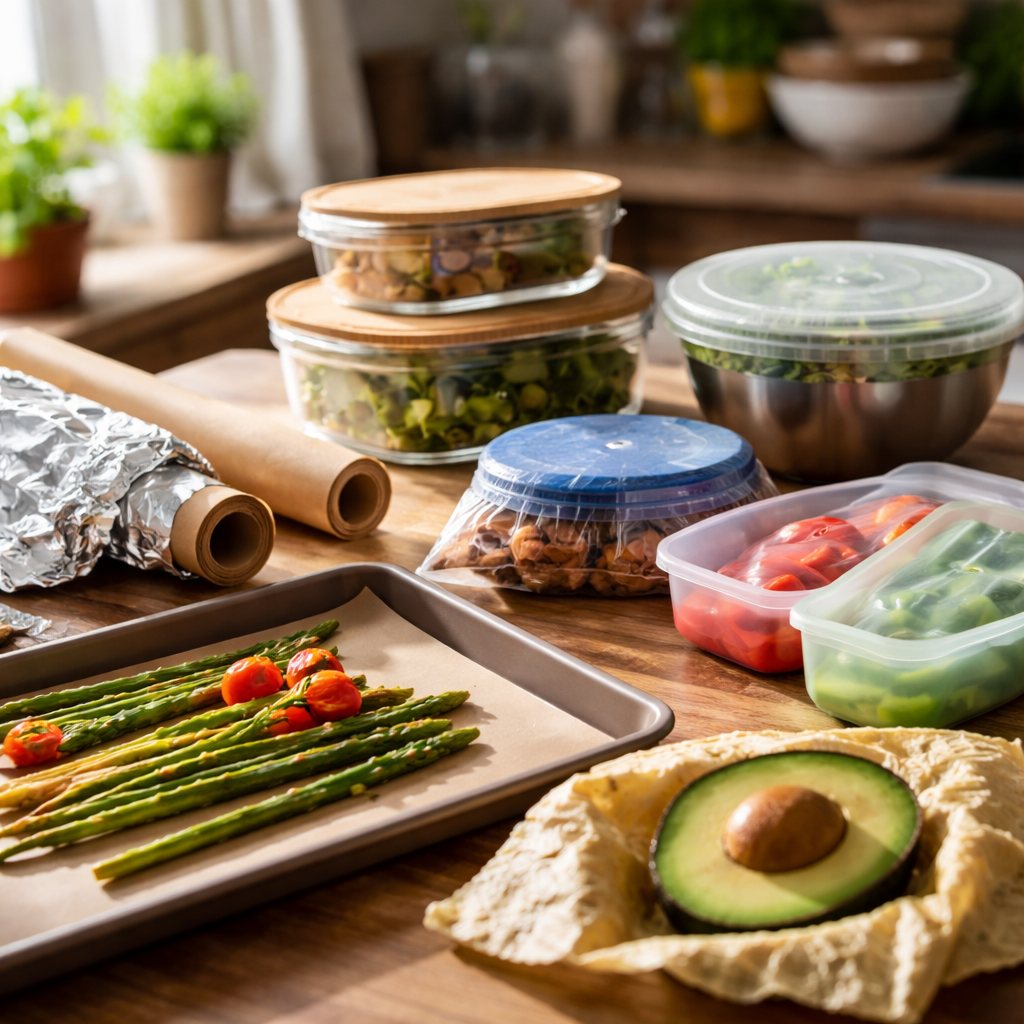
Most kitchens go through aluminum foil almost automatically — wrapping leftovers, lining baking sheets, covering dishes before they go into the oven. But looking for a reliable alternative to aluminum foil is something more and more people are doing, whether out of concern for the environment, health considerations, or simply because they ran out and want a smarter long-term swap. The good news is that in most everyday cooking and storage situations, foil is far from irreplaceable.
Why people are moving away from foil
Aluminum foil is a single-use product. Once you crinkle it, it almost always ends up in the trash — and while it is technically recyclable, contamination from food residue makes the recycling process difficult in practice. On top of that, some cooking researchers have raised questions about aluminum leaching into acidic or spicy foods at high temperatures, though regulatory bodies in most countries consider typical household use safe.
Still, the conversation around sustainability and reusable kitchen tools has shifted the way many households think about their everyday habits. Switching away from disposable materials is not about being perfect — it is about making better choices where you realistically can.
The most practical swaps for common foil uses
Foil gets used in a handful of very different ways, and the best replacement depends entirely on what you are actually doing with it. There is no single product that covers everything, but there are excellent options for each scenario.
| Foil use case | Best alternative | Notes |
|---|---|---|
| Covering dishes in the oven | Oven-safe lids or silicone covers | Reusable, heat-resistant up to ~220°C |
| Lining baking sheets | Silicone baking mats (e.g. Silpat) | Non-stick, dishwasher safe |
| Wrapping food for storage | Beeswax wraps or reusable silicone bags | Great for fridge storage, not freezer |
| Grilling | Cast iron grill pan or cedar planks | Adds flavor, no waste |
| Steaming or en papillote cooking | Parchment paper | Biodegradable, handles moisture well |
Parchment paper: the closest everyday replacement
If you want a single-product answer that works for most baking and roasting tasks, parchment paper is the most straightforward option. It handles heat well (typically up to around 220–230°C depending on the brand), it does not stick, and it creates a natural seal when folded around fish or vegetables for steam cooking. Unlike foil, it does not conduct heat to the same degree, which actually benefits delicate baked goods by reducing the risk of over-browning on the bottom.
For roasting vegetables or baking cookies, parchment paper performs just as well as foil — and many bakers say it produces more even results.
Unbleached parchment paper is worth choosing over the bright white variety if you want to avoid chlorine-based bleaching agents. Some brands also offer compostable versions, which makes disposal less of an issue.
Silicone baking mats and covers
Silicone has quietly become one of the most versatile food-safe materials in modern kitchens. Flat silicone baking mats fit standard sheet pans and eliminate the need to line them with anything at all. They are non-stick without any coating, they tolerate high oven temperatures, and with proper care they last for hundreds of uses.
Flexible silicone lids and stretch covers serve a different purpose — they seal over bowls, pots, and plates to keep food fresh during storage or to trap steam during reheating. They come in sets of different sizes, which makes them adaptable across a range of cookware shapes.
Beeswax wraps for food storage
Beeswax wraps have moved well beyond niche health stores and are now widely available in supermarkets and online. They work by using the warmth of your hands to mold around food items or over the tops of bowls, creating a light seal. They are particularly good for wrapping cheese, sandwiches, cut fruit, and bread.
A few things to keep in mind with beeswax wraps:
- They should not be used with raw meat or fish, as they cannot be sanitized at high temperatures.
- Cold water is needed for cleaning — hot water melts the wax coating.
- They are not suitable for the freezer, as the wax becomes brittle and loses its flexibility.
- Plant-based versions (made with candelilla wax) are available for those who avoid animal products.
A note on glass and stainless steel containers
Sometimes the question is not about wrapping food at all, but about covering and storing it between meals. In that context, glass containers with airtight lids and stainless steel food boxes replace not just foil but also plastic wrap and disposable bags in one move. They are neutral in terms of taste, do not absorb odors, and handle both the fridge and the freezer without any issues.
What actually holds up on the grill
Grilling is probably the trickiest area to navigate without foil, because the open flame and high heat rule out many materials. Cedar or alder planks are one of the most interesting alternatives — soaked in water before use, they create a slightly smoky steam environment that works beautifully with fish and chicken. Cast iron cookware placed directly on the grill handles everything from vegetables to steaks without any liner at all.
For situations where you need to keep smaller or delicate items from falling through the grate, stainless steel grill baskets and mesh pans are specifically designed for exactly that purpose. They clean easily and last indefinitely with reasonable care.
Making the shift without overcomplicating it
The goal is not to eliminate every trace of convenience from your kitchen — it is to make more intentional choices about what you use and why. Most people who shift away from aluminum foil find that the alternatives they adopt actually work better for specific tasks. Silicone mats give cleaner baking results. Glass containers preserve flavor more neutrally. Beeswax wraps breathe slightly, which is actually better for certain foods like aged cheese.
None of these replacements demand a dramatic overhaul of how you cook. They slot into existing habits with minimal friction — and over time, reaching for a reusable mat or a set of silicone lids simply becomes the default, the same way reaching for foil once was.