
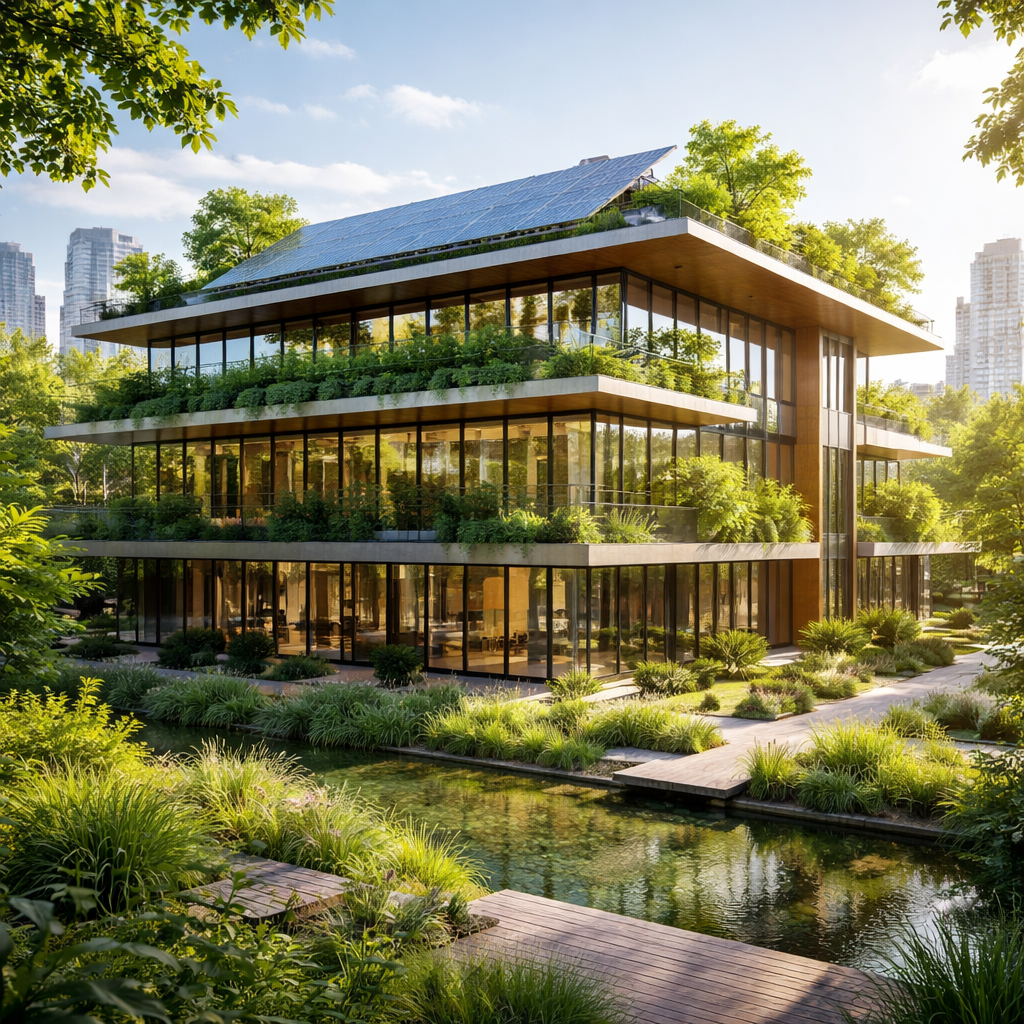
Buildings account for nearly 40% of global energy consumption — and that number isn’t shrinking on its own. The advantages of green building design go far beyond saving electricity bills: they reshape how cities function, how people feel inside spaces, and how responsibly we use the planet’s resources. Whether you’re an architect, a homeowner, or simply someone curious about sustainable living, understanding what green design actually delivers is worth your time.
What makes a building “green” in the first place
Green building isn’t just about solar panels on a rooftop. It’s a comprehensive approach to design, construction, and operation that reduces a structure’s environmental impact while improving the quality of life for the people inside it. This includes everything from site selection and material sourcing to water management, indoor air quality, and long-term energy performance.
Certification systems like LEED (Leadership in Energy and Environmental Design), BREEAM, and WELL Building Standard provide measurable frameworks for what qualifies as sustainable construction. These aren’t just labels — they represent verified performance benchmarks across dozens of categories.
Energy efficiency that actually shows up on paper
One of the most tangible outcomes of sustainable architecture is reduced energy demand. Green buildings use high-performance insulation, triple-glazed windows, passive solar design, and smart HVAC systems to minimize heating and cooling loads. In many cases, well-designed buildings consume 30–50% less energy than conventional equivalents.
| Feature | Conventional Building | Green Building |
|---|---|---|
| Annual energy use | High | 30–50% lower |
| Water consumption | Standard | Up to 40% reduced |
| Indoor CO₂ levels | Often elevated | Actively managed |
| Occupant comfort rating | Variable | Consistently higher |
This efficiency isn’t theoretical. Commercial buildings with green certification consistently report lower operating costs, which directly benefits owners and tenants alike over the long term.
The human side: health, comfort, and productivity
Here’s something that often gets overlooked in conversations about eco-friendly construction: green buildings tend to make people feel better. Studies from the World Green Building Council have linked improved indoor air quality, better natural lighting, and reduced noise levels to measurable gains in occupant health and workplace productivity.
“People in green-certified office buildings report 26% better cognitive function scores compared to those in conventional buildings.” — Harvard T.H. Chan School of Public Health
The connection between the built environment and human wellbeing is well-documented. Biophilic design elements — natural materials, greenery, daylight access — reduce stress hormones and improve focus. This isn’t a luxury consideration anymore; it’s an argument for sustainable building materials and design principles that more developers are taking seriously.
Water conservation and land use
Sustainable building design addresses water at every level. Rainwater harvesting systems, greywater recycling, low-flow fixtures, and drought-tolerant landscaping can collectively cut a building’s water footprint dramatically. In regions where water scarcity is already a concern, these features shift from being optional to essential.
- Rainwater collection for toilet flushing and irrigation
- Permeable paving that reduces stormwater runoff
- Native plant landscaping that requires minimal irrigation
- Smart irrigation systems with moisture sensors
- Low-flow plumbing fixtures certified to reduce water waste
Thoughtful site planning also plays a role. Green design encourages building on previously developed land rather than open ecosystems, minimizing habitat disruption and preserving biodiversity in urban environments.
Financial returns over the building’s lifetime
A common misconception is that green construction is significantly more expensive. The upfront cost premium for certified sustainable buildings is typically 2–7%, but this figure needs to be weighed against the full lifecycle of the building — often 30, 50, or even 100 years.
Lower utility bills, reduced maintenance costs, higher property values, and better tenant retention all contribute to a stronger return on investment. Several analyses have shown that green buildings command rental premiums of 5–10% and sell at higher prices compared to non-certified equivalents in the same market.
Carbon footprint and climate responsibility
The construction industry generates a substantial share of global carbon emissions — both through the energy used in buildings and through embodied carbon in materials like concrete and steel. Green building design addresses both sides of this equation.
Low-carbon building materials such as cross-laminated timber (CLT), recycled steel, and rammed earth are increasingly being used in high-performance structures. Passive house design principles eliminate the need for conventional heating systems entirely in many climates, pushing net-zero energy buildings from concept to mainstream.
When a building produces as much energy as it consumes — or more — through renewable sources like rooftop solar or geothermal systems, it stops being part of the problem and starts contributing to the solution. These net-positive buildings represent the leading edge of where sustainable construction is heading.
Green design is changing expectations, not just buildings
What’s particularly interesting about the green building movement is how it’s reshaping demand. Tenants increasingly expect better air quality and thermal comfort. Cities are introducing stricter energy codes. Investors are factoring ESG (Environmental, Social, and Governance) criteria into real estate decisions. And younger generations entering the housing market are placing real value on sustainability features when choosing where to live.
This shift means that sustainable design is no longer a niche preference — it’s becoming a baseline expectation. Buildings that don’t meet evolving efficiency standards risk becoming stranded assets: costly to operate, difficult to sell, and out of step with both regulation and market demand.
Whether you’re approaching this topic as a homeowner planning a renovation, a developer evaluating a new project, or simply someone who wants to understand how the spaces around us are evolving, green building design offers a clear, evidence-backed case for building differently. Not because it’s fashionable — but because the numbers, the science, and the lived experience all point in the same direction.