
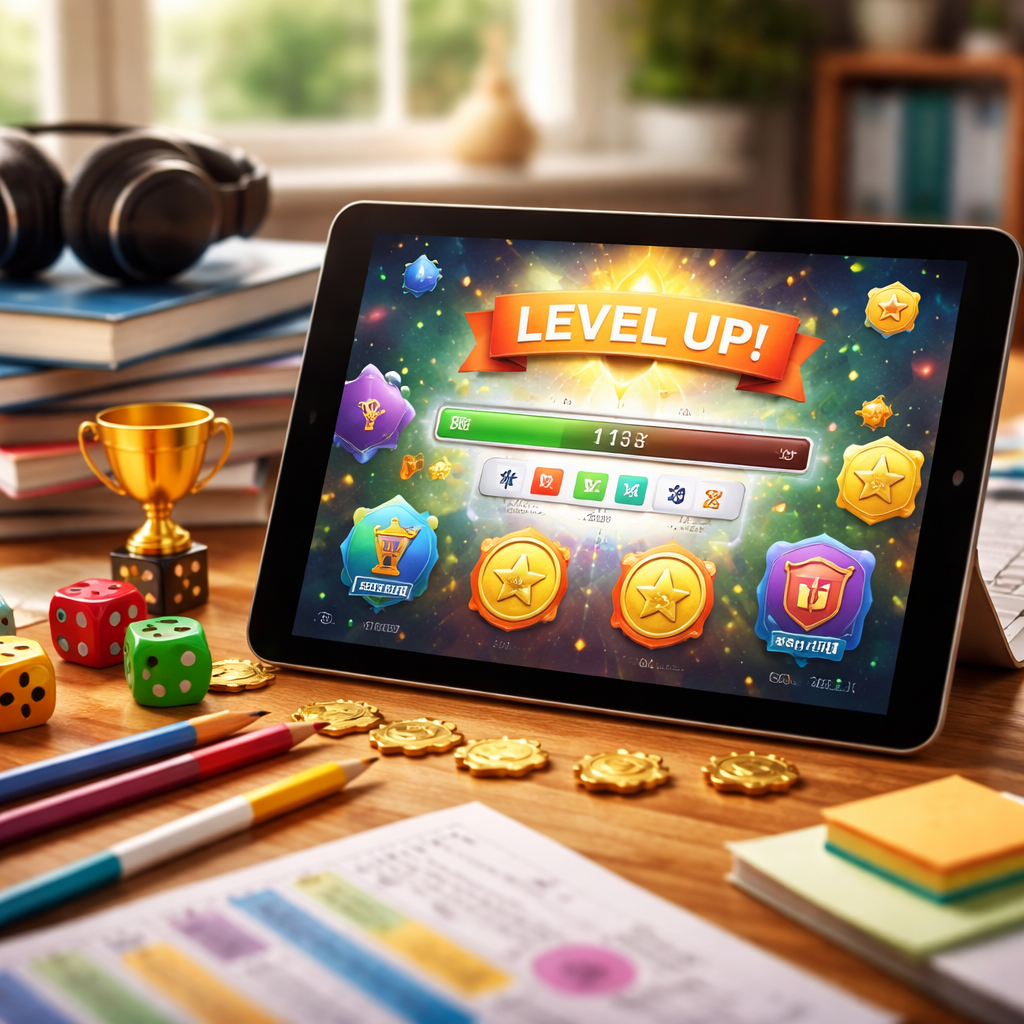
Ask most students why they lost interest in a subject, and the answer rarely has anything to do with the topic itself — it’s usually about how it was taught. This is exactly where the advantages of gamification in education become impossible to ignore. When learning is designed around challenge, reward, and meaningful progress, engagement stops being a struggle and starts being a natural outcome.
What gamification actually means in a classroom context
Gamification is not about turning every lesson into a video game. It’s the deliberate use of game mechanics — points, levels, badges, leaderboards, instant feedback, and narrative structure — applied to non-game environments like schools, corporate training, or online courses. The distinction matters, because many people confuse gamification with game-based learning, which relies on actual games as teaching tools. Gamification, by contrast, transforms the learning process itself by borrowing the psychological architecture that makes games so compelling.
Research in cognitive psychology consistently shows that people learn better when they receive timely feedback, feel a sense of autonomy, and perceive their effort as meaningful. Game design has been engineering exactly these conditions for decades — education is now catching up.
The mechanics behind the motivation
To understand why gamification works, it helps to look at the underlying drivers. Humans are wired to pursue goals, track progress, and respond to social recognition. When these elements are built into an educational environment, something shifts in how learners relate to the material.
- Immediate feedback loops reduce the gap between effort and understanding, making it easier for students to self-correct.
- Progress bars and level systems give learners a visible sense of advancement, which counters the common feeling that “nothing is changing.”
- Achievement badges create micro-milestones that sustain motivation over longer learning journeys.
- Leaderboards — when used thoughtfully — can stimulate healthy competition and social accountability.
- Narrative and challenge frameworks give abstract knowledge a context that feels relevant and worth mastering.
None of these elements are magic on their own. Their power comes from how they interact — creating what researchers call a “flow state,” where difficulty and skill are in balance and learners lose track of time because they’re genuinely absorbed.